If you need an alternative to Replika, don’t start with app names. Start with the thing that stopped working.
That sounds simple. It usually isn’t. People bounce from one companion app to another because the original frustration stays fuzzy. Maybe the bot forgot too much. Maybe the tone got weird after moderation changes. Maybe the voice features looked better on the pricing page than they felt in real use. Or maybe the bigger truth is this: the chat itself is no longer the whole issue. You want something you can shape, trust, or even turn into an asset—not just another subscription living on someone else’s platform.
That is why there is no single best alternative to Replika in the abstract. There are better fits for specific problems: weak memory, shallow customization, restrictive moderation, uneven voice, privacy discomfort, or the fact that consumer apps are fine for chatting but terrible for ownership.
Get that part right and the shortlist gets much smaller. Miss it, and you can lose another month testing apps like Replika that feel promising for two conversations and flat by the end of the week.
Start with the reason you’re leaving Replika
Most people searching for a Replika alternative are not looking for novelty. They are trying to replace a specific feeling or function that broke.
Sometimes it is continuity. The AI no longer feels like it knows you. You repeat yourself, it drops the thread, and the relationship starts feeling more like a demo than a companion. Sometimes the break is moderation. The boundaries feel inconsistent, intimacy gets awkwardly interrupted, or the overall experience stiffens after a platform change. And for creators, streamers, models, and small founders, the problem can be more practical than emotional: even if the app is decent, there is nothing there to own, brand, grow, or monetize.
Those are very different reasons to switch, and they lead to different choices. Someone who wants a calmer daily companion for voice chats on the commute should judge tools by continuity, emotional steadiness, and whether voice is actually usable. A creator trying to turn a character into a fan-facing experience should care less about which app feels nicest and more about control, policy risk, branding, and monetization.
That distinction matters because search results often flatten everything into one bucket. A personal companion app, a character sandbox, and a white-label AI platform can all appear under “apps like Replika.” They are not solving the same job.
The criteria that actually matter in a Replika alternative
Most roundups throw around the same words: memory, voice, customization, privacy. Useful words, but usually left vague enough to hide the real trade-offs.
Memory is not “it remembered my name once.” What matters is whether the system keeps preferences, recurring topics, boundaries, tone, and relationship context without making you restate everything. Plenty of tools market memory well and deliver only fragments. It feels smart in onboarding. By week two, it feels thin.
Voice has the same problem. Some products say they support voice when they really mean voice notes, read-aloud replies, or limited audio interaction. If what you actually want is live, natural back-and-forth, that gap shows up fast.

Customization also gets oversold. In weaker products, it means cosmetic choices and a few broad sliders. In stronger ones, it affects behavior: how the AI speaks, what tone it keeps, what it remembers, how it handles boundaries, how roleplay works, and whether the personality stays coherent. Cosmetic control is nice. It does not fix shallow conversation.
Privacy is where people get careless because the app feels personal. That’s the trap. If you are going to use an AI companion like Replika for emotional, intimate, or highly personal conversations, you need to know what happens to that data. Vague deletion rules, broad retention, or unclear data use should count against a tool immediately.
Portability matters more than many users expect. For a casual personal user, maybe not much. For a creator or founder, a lot. Can you move anything meaningful later? Your setup, your audience, your character logic, your monetization flow? Or are you locked into a platform that can change the rules whenever it wants?
If you want one clean framework, use this: judge every option by continuity, control, and cost of compromise. Does the relationship hold together? Can you shape the experience in a real way? And what are you giving up in privacy, stability, price, or ownership to get it?
Quick comparison: the best Replika alternatives at a glance
| Option | Best for | Memory | Voice | Customization | Moderation flexibility | Personal or business fit |
|---|---|---|---|---|---|---|
| Nomi AI | Emotional continuity and relationship feel | Strong relative memory | Varies by current feature set | Good personality shaping | More flexible than stricter mainstream apps | Best for personal use |
| Character AI | Large character variety and playful chat | Mixed, often inconsistent | Limited depending on plan and features | Strong character setup, weaker relationship persistence | Tighter moderation | Personal entertainment |
| Kindroid | Customization and immersive companion design | Solid for recurring context | Often a selling point | Deep persona and scenario control | Usually more flexible | Personal power users |
| Chai | Bot variety and looser roleplay exploration | Variable by bot | Not usually the core strength | High variety, uneven quality | Often looser, but less predictable | Personal experimentation |
| Pi | Supportive conversational tone | Less companion-style persistence | Voice-friendly feel | Limited character depth | Conservative | Personal conversation, not roleplay |
| Scrile AI | Building a branded AI companion product | Depends on implementation scope | Can be designed around your use case | High control at platform level | Policy and monetization control are the point | Business, creator, founder use |
This table reveals the first big fork that many best Replika alternatives articles blur: some options are products you subscribe to as a user. One is a route to build something you control. If you skip that distinction, you can compare forever and still choose the wrong category.
Best Replika alternatives by scenario
If you want the closest emotional companion feel, Nomi AI is usually one of the first tools worth testing. It tends to appeal to people who care less about novelty and more about whether the relationship still feels coherent tomorrow. That matters if your main complaint with Replika is not that it lacks features, but that it lost continuity.
If your problem is shallowness rather than familiarity, Kindroid is often the more interesting direction. It tends to make more sense for users who want deeper persona control and more say in how the AI behaves, not just how it looks. If customization is your top priority, this is the kind of option that deserves serious testing instead of a quick browse.
Character AI and Chai fit a different mood. They work better when what you want is variety, experimentation, and access to lots of characters quickly. The trade-off is that breadth is not the same as stability. These apps can be fun, flexible, and chaotic—sometimes all in the same hour. If you want dependable intimacy, stronger memory, or a stable long-term companion feel, that difference matters.
Pi lands in another category again. It can suit readers who want a supportive, polished conversational experience without leaning hard into relationship simulation or roleplay. For some users, that will feel cleaner and safer. For others, it will feel too restrained.
What about an uncensored Replika alternative? That is a real search intent, but it is also where people make sloppy decisions. More freedom can absolutely matter. It can also come with weaker guardrails, less predictable moderation, billing friction, quality swings, or future reversals once a platform changes policy. Uncensored is not a synonym for better. Sometimes it just means less stable.
And then there is the group that already feels cramped by all of these. If you are a creator, agency, or solo founder and your real ambition is to build an audience-facing companion, fan persona, or paid AI experience, the best move may not be another consumer app at all. At that point, the issue is no longer chat quality alone. It is ownership.
Which options feel most like Replika — and which ones move beyond it?
Some people switching from Replika do not want a dramatic break. They want something familiar enough that the emotional rhythm still makes sense, just with fewer frustrations. That is a fair reason to prioritize apps that preserve the companion feel.
But there is a catch. The closer a tool feels to Replika, the more likely it is to carry some of the same structural limits that made you leave in the first place. Familiarity lowers friction. It can also hide stagnation.
On the other side are tools that feel less instantly comfortable but offer more room: stronger persona control, looser roleplay, deeper scenario setup, or more expressive interaction styles. These can be a better fit if you are not trying to recreate the old experience—you are trying to outgrow it.
Here’s the blunt version: if you leave because Replika feels over-filtered and repetitive, then choosing the closest emotional copy without testing moderation and depth is an easy way to buy the same disappointment twice. If you leave because you want steadier connection and instead jump into the loosest, wildest roleplay app available, you may gain freedom and lose trust. Both mistakes cost money. More importantly, they waste momentum.
What better memory and better customization actually mean in practice
Marketing language is cheap here. Testing is not.
In the first 24 hours, give the AI a few specific preferences, one boundary, one recurring topic, and one callback for later. Then leave. Come back hours later or the next day and see what survives without feeding the answer back in. Does it remember naturally? Does it hold the tone? Does it keep your boundary consistently, or only when the prompt is fresh?
That simple test reveals a lot. Many apps like Replika are impressive on day one because onboarding is designed to flatter you. The real quality gap shows up when novelty wears off and memory has to carry the relationship on its own.
The same goes for customization. Ask yourself whether you are changing the AI’s behavior or just decorating the wrapper. A better avatar, a different outfit, a new name—none of that means much if the voice still feels generic, the responses drift, and the persona collapses under pressure.
For creators, this gets even more practical. Picture a streamer building a side character for fan engagement. The useful question is not can I make the bot cute. It is can this system keep my tone, remember community jokes, stay on-brand, and eventually support a premium interaction model. That is a completely different standard. Most consumer apps are not built for it. They are built to entertain the user inside the platform, not help you build a durable layer on top of your brand.
Privacy, moderation, and emotional risk: the trade-offs people notice too late
This is where a lot of comparison pages get timid. They shouldn’t. Choosing the wrong tool here does not just lead to mild disappointment. It can leave you overexposed, overcommitted, or stuck in a setup that shifts under your feet.

Start with privacy. If you are putting intimate or emotionally loaded conversations into a platform, you need to know how comfortable you are with the platform’s rules—not the feeling of privacy, the actual rules. If deletion is hard to understand, if retention looks broad, if data handling is unclear, that should cool your enthusiasm fast.
Moderation creates a different kind of risk. A lot of users want a less restrictive alternative to Replika because they are tired of awkward interruptions or shifting boundaries. Fair enough. But looser moderation can bring its own friction: inconsistent outputs, lower trust, more erratic quality, or a product that later swings in the opposite direction once the company tightens policy. The point is not to moralize. The point is to understand that freedom and stability often pull against each other.
Then there is emotional stickiness. AI companions can feel unusually reliable because they are always available, attentive, and often designed to sound warm. That does not make them therapy. It does mean unstable quality or sudden policy shifts can hit harder than people expect. If a tool is going to become part of your daily life, test it with clear eyes before you attach real weight to it.
The broad rule is simple. The more personal your use case is, the more trust and continuity matter. The more business-focused your use case is, the more ownership and policy control matter. People get burned when they judge one by the standards of the other.
If you’re switching now, test these seven things before you subscribe
- Memory after time passes: does it remember meaningful details a day later without prompting?
- Tone control: can you shape how it speaks and reacts, or just pick surface traits?
- Boundary consistency: does it handle your limits predictably?
- Voice reality: is voice actually live and usable, or mostly clips and readouts?
- Paywall pressure: what gets locked after a few chats—voice, images, better models, longer memory?
- Data control: can you find deletion and account settings easily?
- 30-day honesty check: if the novelty disappeared, would this still be worth paying for?
Run those tests before you emotionally settle in. Before you buy annual pricing. Before you start telling yourself that this one is probably fine. That is how people drift into the wrong fit.
Consumer app or owned platform? The decision most lists ignore
This is the split that matters most for ModelNet readers.
If you want a personal companion, a roleplay tool, or a better private chat experience than Replika gives you now, a consumer app may be enough. You just need the right fit. In that case, stay focused on memory, moderation, voice, pricing, and comfort.
But if your real goal is bigger—fan engagement, a branded AI persona, a paid companion experience, a niche community product—then consumer apps start looking cramped very quickly. You do not control the environment. You usually do not control the payment logic. You do not own the audience relationship in the same way. You build momentum inside someone else’s product, under someone else’s rules.
That is not a flaw in those apps. It is simply their business model. They are designed to keep users inside their ecosystem, not help creators and founders build independent assets.
When another app is enough — and when you should build instead
If you want a better AI companion for yourself, another app is enough. Don’t overthink it. Pick two or three strong candidates, test them hard, and choose the one that holds up after the first wave of novelty.
If you are a creator experimenting with AI as part of your content or community, an app can still be useful at first. It lets you learn what people respond to. But the ceiling shows up sooner than many expect. Once fans start caring about continuity, exclusive interaction, or a recognizable persona, platform dependence becomes expensive. You are putting energy into something you do not really own.
If you are an agency, solo founder, or operator validating an AI companion business, the question changes again. At that point, which app is nicest is the wrong layer. The real question is which setup gives you the control to brand, monetize, manage access, and grow without asking permission every time you want to evolve the product.
Why creators and startups hit a ceiling with generic companion apps
The hidden cost of generic companion apps is not just feature limits. It is dependence disguised as convenience.
You can build interest around a character, drive traffic to it, train users to come back, and still end up with very little that is durable if the platform owns the surrounding experience. One policy update can narrow what the character can do. One billing shift can wreck the economics. One moderation change can flatten the tone that made people care in the first place.
That is why many of the best Replika alternatives are still partial answers for creators. They solve the immediate chat problem. They do not solve the ownership problem.
And ownership is where the upside lives. Branding, payment flow, user access, policy control, experience design, deployment flexibility—those are not extra concerns if the goal is a real business. They are the business.
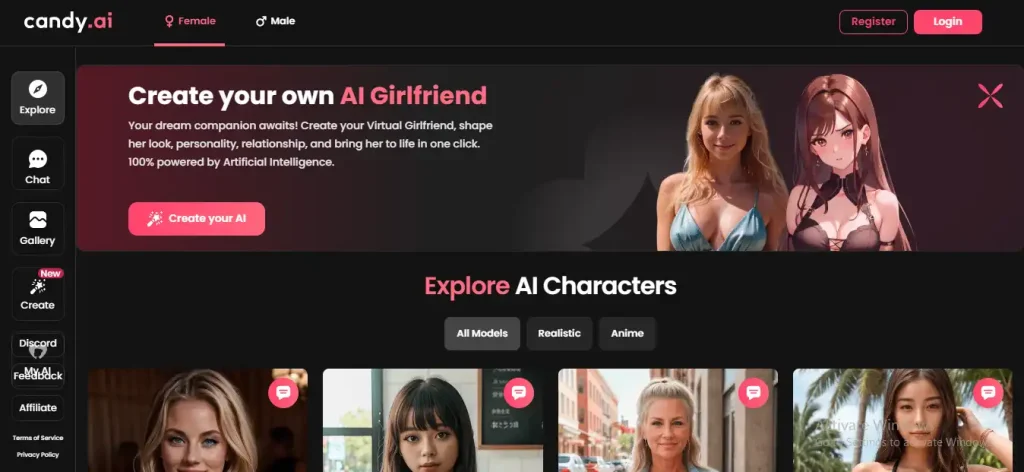
If your goal is to launch your own AI companion business, this is the more sensible path
Most alternatives in this guide are valid if your goal is personal use. Some are better for continuity, some for customization, some for experimentation. That part is straightforward.
But if you keep comparing consumer apps while thinking about branding, monetization, audience ownership, or building a long-term product, you are solving the wrong problem. You are still shopping like an end user when your actual job is starting to look like product design.
That shift matters. A generic app can help you test whether people like the idea of an AI companion. It cannot give you the same control over the environment, business model, and experience that an owned platform can. For creators and digital founders, that is usually the real bottleneck—not whether one chatbot feels 10 percent warmer than another.
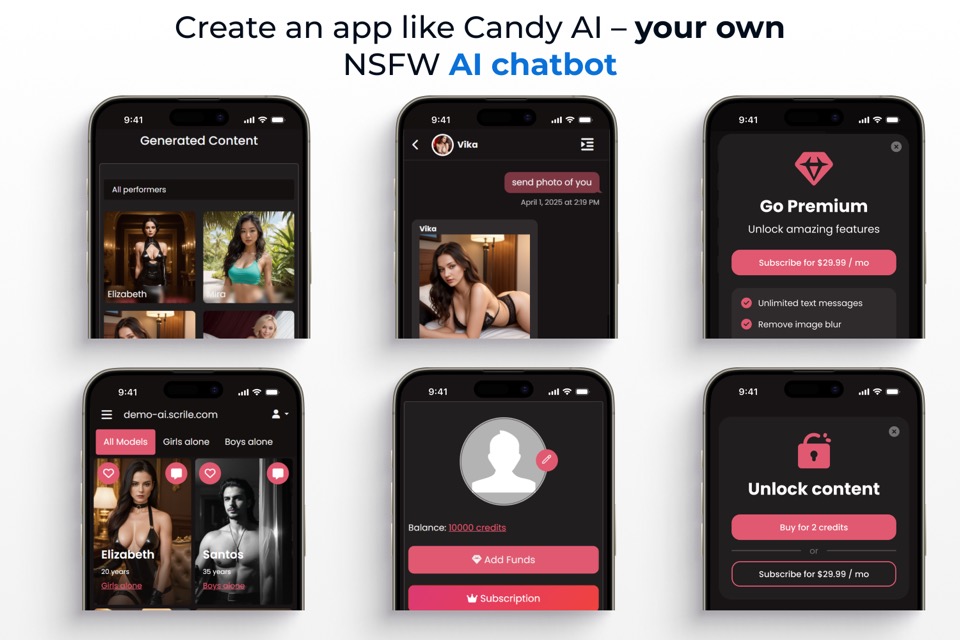
This is where Scrile AI becomes the more sensible path to evaluate. It is not another consumer companion app competing for your monthly subscription. It is aimed at creators, agencies, and founders who want to launch their own AI companion product with greater control over branding, monetization, and how the experience is shaped.
That makes it relevant for a very specific reader: the one who has already felt the limits of rented platforms and does not want the next alternative to Replika to become another dependency. If that is you, the next smart move is not more casual app hopping. It is to explore Scrile AI and decide whether a white-label or custom route matches what you are actually trying to build.
How to make the final choice
Don’t leave this as an open-ended search.
If emotional familiarity is the priority, shortlist the options strongest on continuity and relationship feel. If you care more about persona control and deeper customization, move toward the tools that give you more behavioral control. If freedom matters most, test the looser platforms—but do it with your eyes open about moderation volatility and consistency. And if your real aim is a branded companion product, stop comparing only as a subscriber and start evaluating platform paths seriously.
The next step is practical: pick two or three options only. Test them against your real use case, not their homepage language. Check memory after time passes. Test voice. Read the privacy rules. Look at what is paywalled. Ask yourself whether you are choosing a personal tool, a content experiment, or the base layer of something you eventually want to own.
That question cuts through a lot of noise. Once you answer it honestly, most of the field falls away. What’s left is smaller, clearer, and much easier to act on.
If that clarity points you toward one more subscription, fine—choose cleanly. But if it points toward control, brand ownership, and a product you can actually grow, stop treating this like casual app shopping and see what Scrile AI can support. That is where comparison ends and real leverage begins.
Frequently asked questions
What is the best alternative to Replika in 2026?
There is no single best option for everyone because the right choice depends on why Replika stopped working for you. If you want emotional continuity, one type of app makes more sense; if you want ownership, branding, or monetization, a platform approach is stronger. The fastest way to choose is to match the tool to your actual problem instead of comparing app names in the abstract.
Which Replika alternative feels most similar for emotional companionship?
If your priority is a steady companion feel, options focused on relationship continuity are usually the best place to start. The article points to Nomi AI as a common fit for users who care about coherence over time more than novelty. It is worth testing with your normal conversation style for a few days, because first impressions often look better than long-term consistency.
What should I look at besides memory and voice when comparing apps like Replika?
Look at continuity, control, and cost of compromise. That means checking whether the AI keeps tone, preferences, and context over time, how much you can actually shape its behavior, and what you give up in privacy, moderation flexibility, or platform lock-in. Those trade-offs matter more than feature lists on a pricing page.
Are uncensored Replika alternatives automatically better?
No. More freedom can help if restrictive moderation is your main issue, but it can also come with weaker guardrails, uneven quality, and future policy reversals. A better test is whether the experience is stable, clear, and usable for your needs rather than simply labeled uncensored.
Which Replika alternative is better for creators, founders, or monetized AI companions?
If you want to build a branded AI experience instead of just subscribing to one, consumer companion apps usually are not enough. In that case, control over policy, customization, audience experience, and monetization matters more than chat novelty. Scrile AI is the kind of option to evaluate when ownership and business flexibility are part of the decision.
How do I know if I need another app or a platform I can control?
If you only want better daily conversations, testing companion apps is the right path. If you want to brand the experience, shape the rules, grow an audience, or turn the AI into an asset, you are already in platform territory. That is usually the point where looking at Scrile AI makes more sense than continuing to rotate through consumer apps.

Customer success and operations at Scrile. Specializes in corporate administration, project coordination, and the operational mechanics behind B2B retention. Writes about onboarding, retention, and what actually moves customer outcomes.