
An AI clothes remover generates synthetic nude or sexualized images from clothed photos rather than actually revealing anything real. Using these tools on real people without consent creates serious privacy and legal risks. Many AI clothes removal platforms also store or reuse uploaded images, which adds another layer of risk. Safer alternatives exist for adult content and monetization that avoid these issues entirely.
Search for a AI clothes remover today and you’ll land on pages promising instant results. Upload a photo, click a button, and watch clothes disappear. That’s how it’s marketed. In reality, these tools don’t “remove” anything. They generate fake nude or sexualized images based on guesses.
So why are people looking for this? Part curiosity, part porn-driven demand, and part attempts to monetize fast through bots, subscriptions, or niche content. The barrier feels low, and the payoff looks quick.
But this isn’t harmless experimentation. Behind every AI clothes remover sits a mix of privacy risk, consent issues, and growing legal pressure. Some users realize it too late, after images spread or accounts get blocked.
This article breaks it down clearly. What these tools actually do, where the risks come from, how laws are changing, and what safer paths exist if you’re thinking beyond curiosity.
What Is an AI Clothes Remover and Why People Use It
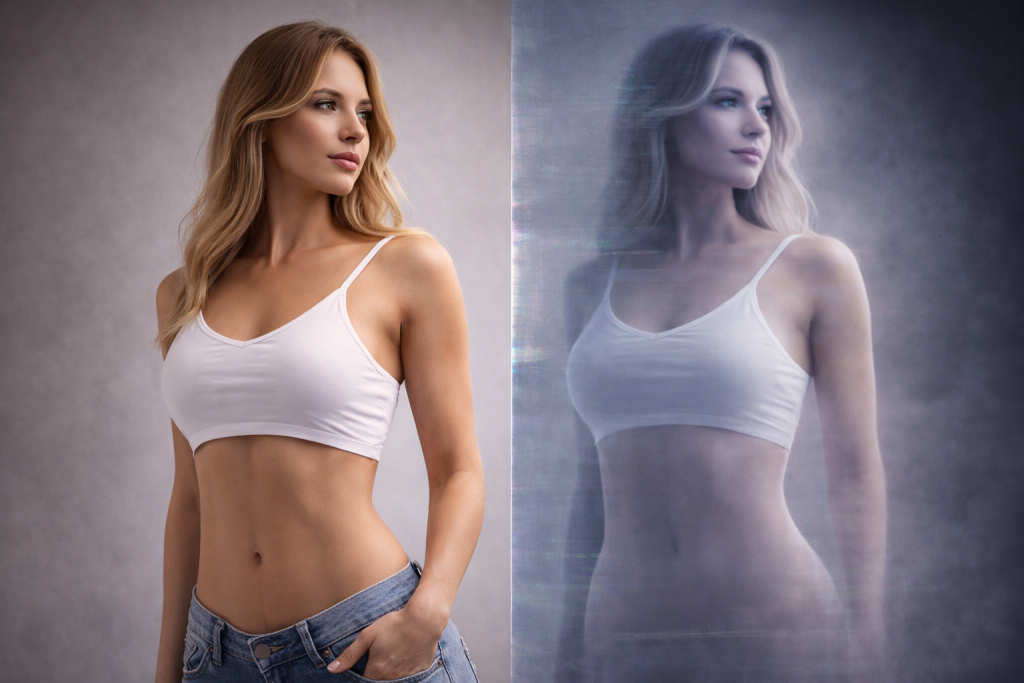
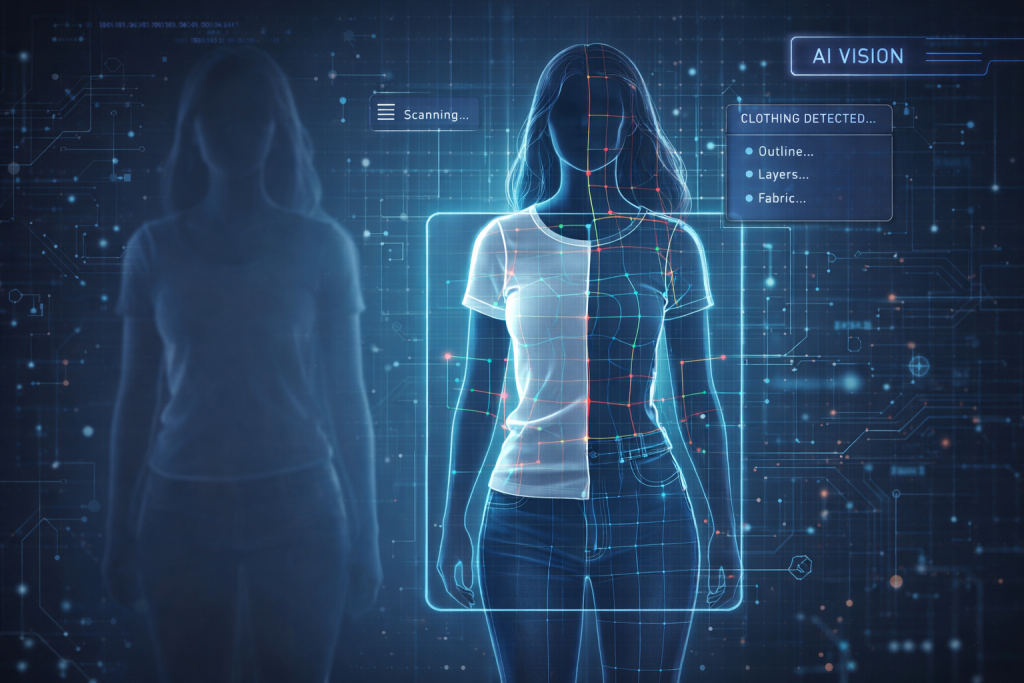
An AI clothes remover is software that takes a normal photo and generates a version where clothing appears removed. Nothing is actually revealed. The system builds a synthetic image from scratch, based on patterns it learned during training. That’s why the result can look plausible for a second, then feel slightly off once you pay attention.
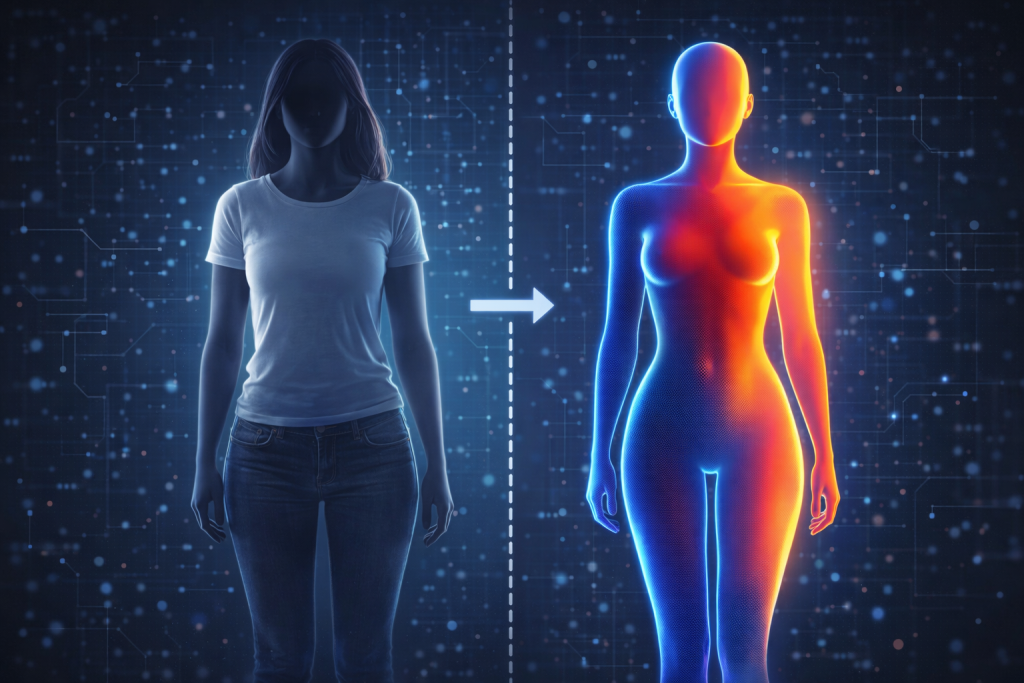
Under the hood, most tools rely on diffusion models. They predict body shape, skin texture, and lighting, then blend everything into the original photo. This process is often described as AI clothing removal, but it’s closer to guesswork than reconstruction. The model fills in gaps using probability, not truth.
People are drawn to these tools for very specific reasons:
- Porn niches such as voyeur-style or transformation content
- Curiosity driven by viral clips and “try it yourself” demos
- Quick monetization ideas through bots, subscriptions, or gated content
You’ll often see them labeled as a clothes remover AI tool or similar variations, usually promising instant results with no effort. That promise is what pulls users in.
The reality looks different once you try it. Outputs break in subtle ways. Bodies don’t align properly. Skin tones shift. Details blur or stretch. One image might look passable, the next completely unusable.
That inconsistency is the core limitation. These tools are built for attention and traffic, not for stable or high-quality production.
The Real Risks: Privacy, Consent, and Data Exposure
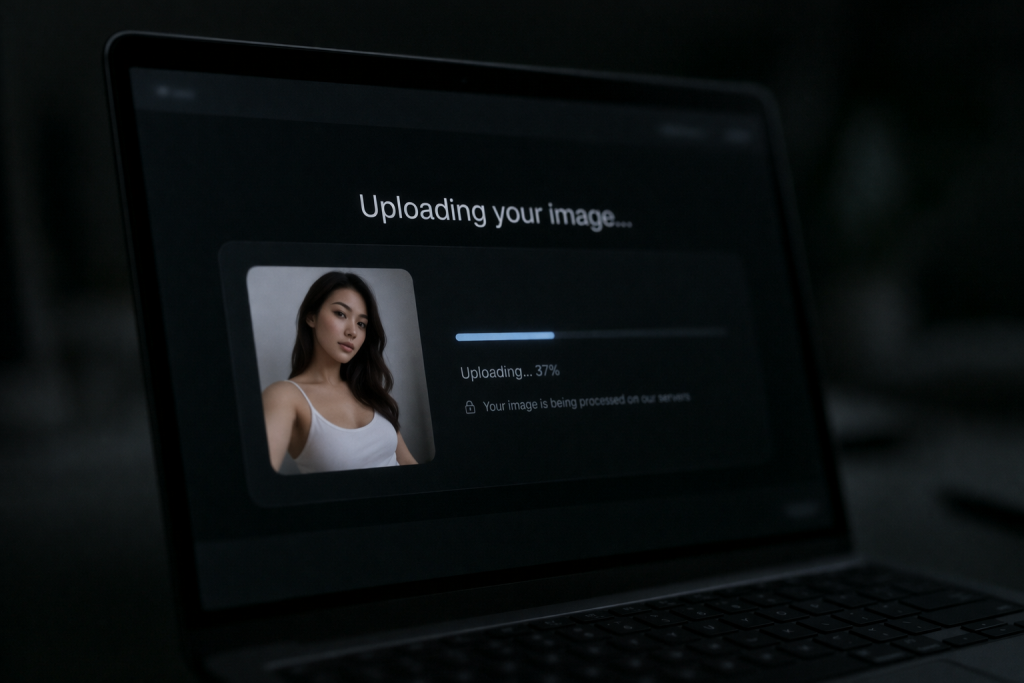
The biggest issue with any AI clothes remover is not the output quality. It’s what happens to people in the process. Most use cases involve someone else’s photo. That turns a simple upload into non-consensual image manipulation.
There is no neutral ground here. When a face or body is altered into sexual content without permission, it becomes a form of digital exploitation. Even if the image is fake, the impact is real. People have lost jobs, relationships, and online reputations over images they never agreed to create.
Another layer most users ignore is data exposure. Many platforms offering AI clothes removal don’t run locally. They process images on remote servers, often without clear policies about storage or deletion. That creates a chain of risk the moment a file is uploaded.
Where Data Actually Goes
- Images are sent to external servers, not processed on your device
- There is no guarantee files are deleted after processing
- Some platforms reuse uploaded content to improve models or expand datasets
That means a single upload can live far beyond your control. It can be stored, copied, or even resurface in other contexts.
The recent Grok scandal pushed this issue into the mainstream. An AI system was used to generate sexualized content involving real individuals without consent, triggering public backlash and regulatory attention. It showed clearly that this is no longer a fringe toolset. It’s a visible, growing problem with real consequences.
“Britain… urged Elon Musk’s X platform to urgently address a proliferation of intimate ‘deepfake’ images created on demand via its built-in AI chatbot Grok.”
— Reuters
Legal Status: Is AI Clothes Removal Illegal?
Short answer: using an AI clothes remover is increasingly illegal depending on how it’s used. The key factor is consent. Generating or sharing sexualized images of a real person without permission is now being treated as a criminal offense in multiple jurisdictions, especially when it falls under deepfake or intimate image abuse.
US – TAKE IT DOWN Act
In the United States, the TAKE IT DOWN Act (2025) directly targets non-consensual intimate imagery, including AI-generated deepfakes. It requires platforms to remove such content quickly and establishes legal consequences for distribution.
A clear legal framing comes from the law itself, which requires platforms to remove “nonconsensual intimate visual depictions” upon request.
In practice, this means:
- Creating or sharing fake nude images of someone can trigger legal action
- Platforms must respond fast or face penalties
- Victims now have formal mechanisms to force removal
The shift is important. This is no longer handled only through civil complaints. It’s moving into enforceable federal regulation.
UK and EU
The UK is moving even more aggressively. Authorities have made it clear that creating explicit deepfake images without consent is crossing into criminal territory.
A direct government statement makes the position obvious:
“There is no excuse for creating a sexually explicit deepfake of someone without their consent.”
— Government crackdown on explicit deepfakes, GOV.UK
Planned updates go further, targeting both creation and distribution, with potential prison sentences.
Across the EU, the approach is slightly different but still tightening. The AI Act introduces transparency rules around synthetic content, while individual countries enforce laws against image-based abuse.
What matters in practice:
- The legal grey zone is shrinking fast
- Consent is becoming the central requirement
- Even generating content privately can become risky depending on jurisdiction
The direction is clear. Tools like an AI clothes remover are moving from “unregulated curiosity” into a legally sensitive area with real consequences.
Why Most AI Clothes Remover Tools Are Unsafe by Design
Most AI clothes remover platforms are not built as serious products. They are built to capture traffic fast, convert curiosity into clicks, and move users through ads or paid unlocks. Safety is not part of that model. There is usually no real moderation layer, no identity checks, and no clear responsibility if something goes wrong.
A typical service that claims to remove clothes from images operates behind anonymous domains with minimal transparency. You rarely see company details, legal pages, or clear data policies. That absence is not accidental. It allows operators to avoid accountability while continuing to attract high-volume traffic from viral searches and adult content demand.
The same applies to any so-called clothing remover tool. The focus is on speed and scale, not accuracy or ethics. Content is generated without meaningful safeguards, and user uploads are processed with little clarity about storage or reuse. That combination makes these tools unstable, legally exposed, and fundamentally unsafe by design.
Safe and Legal Alternatives
If you’re thinking in terms of real use and not just curiosity, there are already directions that solve the same need without the risks tied to an AI cloth remover.
AI Models and Synthetic Characters (Adult Industry Use)

Candy AI is built around fully virtual characters. You design the persona, control the visuals, and generate NSFW content without involving real people.
Safer because: no real photos or identities involved
CrushOn.AI focuses more on interaction. It’s about conversations, roleplay, and long-term engagement. Content is generated inside the system, so there’s no dependency on real images.
Safer because: no external image uploads or real-person manipulation
Janitor AI became popular because it allows more flexible, often uncensored character interactions. Many people use it to build niche personas.
Safer because: operates entirely within synthetic environments
SpicyChat AI pushes further into adult scenarios, focusing on fantasy-driven interactions where everything is generated inside the system.
Safer because: no reliance on real identities or uploaded photos
What matters here is control. You’re not editing someone’s photo or trying to remove clothes from a real image. You’re building the entire character and environment yourself, which removes consent issues and gives you a stable base for monetization.
Clothing Replacement and Simulation

OpenArt lets you swap outfits and rework the look instead of simulating nudity. It’s useful for users testing styles or building visual content without legal risk.
Safer because: focuses on transformation, not nudification
Fotor AI gives more controlled edits. You adjust clothing, lighting, and composition with predictable results, not random outputs.
Safer because: operates within standard image editing boundaries
ZMO.ai is closer to real business use. It’s used for virtual try-on, showing how clothing fits different bodies and styles.
Safer because: built for commercial use with clear data handling
This is where things become usable. Instead of chasing unstable AI cloth remover outputs, these tools focus on replacement and simulation. The results are cleaner, safer, and actually scalable if you’re building something long-term.
Monetization Reality
At this point, the question usually shifts from “does it work” to “can it make money.” That’s where the difference between an AI clothes remover model and safer alternatives becomes obvious.
Take a simple scenario. A Telegram bot built around nudification charges $5 per month. With 1,000 users, that looks like $5,000 in revenue. On paper, it feels easy.
In practice, the numbers break fast. Around 30–50% of users churn when results don’t match expectations. Payment providers flag or block accounts tied to adult or risky content. Platforms shut down distribution channels. On top of that, there’s constant legal exposure if real people are involved.
Now compare that to a synthetic model approach. An AI avatar with a subscription base at the same price point can keep users longer, scale across platforms, and operate without the same risk of bans or takedowns.
Here’s how these approaches compare in practice:
| Approach | Legal Risk | Data Safety | Monetization | Longevity |
| AI clothes remover | High | Low | Short-term | Unstable |
| Synthetic AI models | Low | High | Strong | Stable |
| Fashion AI tools | Low | High | Commercial | Very stable |
How to Choose the Right Direction
The real decision comes down to how you want to operate. An AI clothes remover approach looks like fast money, but it depends on unstable traffic, risky platforms, and constant workarounds. It can disappear overnight.
A safer direction starts with risk tolerance. If you want something scalable, you need tools and workflows that won’t get blocked or flagged. Synthetic models and controlled AI content give you that space.
Platform dependency also matters. If your entire setup relies on one bot or channel, you don’t control the outcome. Build something you can move, grow, and keep running long-term.
Conclusion
The technology behind an AI clothes remover is impressive, but the way it’s used today creates more problems than opportunities. Privacy risks, lack of consent, and unstable platforms make it a fragile path. What looked like a shortcut is turning into a liability as regulation catches up.
The market is already shifting. Governments, platforms, and payment systems are tightening control around this space. That pressure will only increase.
The real opportunity sits elsewhere. Tools built on synthetic content, controlled editing, and clear consent models offer something much stronger. They are easier to scale, easier to monetize, and far more sustainable in the long run.
FAQ
Is an AI clothes remover illegal to use?
It can be illegal if it is used to create or share sexualized images of a real person without consent. The risk increases significantly when the content is distributed, sold, or involves a minor.
Can an AI clothes remover actually reveal what is under clothing?
No. An AI clothes remover does not uncover anything real and instead generates a synthetic image based on patterns, training data, and visual prediction.
Are AI clothes remover tools safe for uploaded photos?
Usually not. Many tools process images on external servers, and users often have no clear confirmation that uploaded files are deleted after processing.
What is the safest alternative to AI clothes removal for adult content?
Synthetic characters and AI companion platforms are safer because they do not rely on real people’s images. Outfit replacement tools are also a safer option when the goal is visual experimentation.
Can you build a business around AI-generated adult content without using real photos?
Yes. Many creators use synthetic models and AI-driven characters to build subscription content without the privacy and consent risks tied to real-person image manipulation.

Polina Yan is a Technical Writer and Product Marketing Manager at Scrile, specializing in helping creators launch personalized content monetization platforms. With over five years of experience writing and promoting content for Scrile Connect and Modelnet.club, Polina covers topics such as content monetization, social media strategies, digital marketing, and online business in adult industry. Her work empowers online entrepreneurs and creators to navigate the digital world with confidence and achieve their goals.