
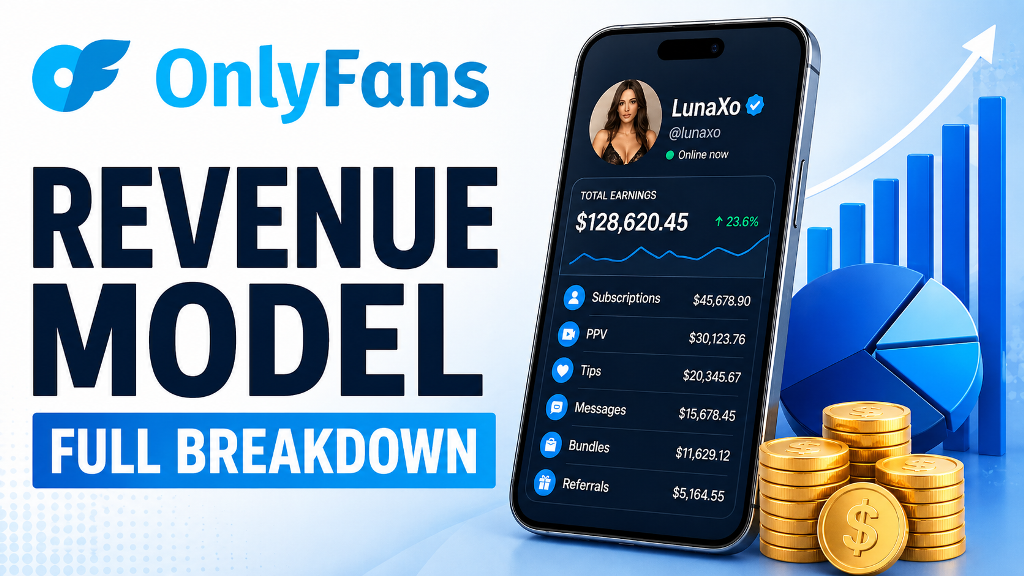
The OnlyFans revenue model is built around direct fan payments. Users subscribe for access, then spend more on extra content. Creators earn from subscriptions, PPV posts, tips, and private messages. OnlyFans processes every transaction and keeps 20%. The rest goes to the creator, turning engagement into steady income plus high-margin add-ons.
If you strip it down, the OnlyFans revenue model is built on access and upsells. Fans pay to get in, then spend more once they’re inside. That’s the core loop.
Here’s how OnlyFans make money: every payment runs through the platform, and it keeps 20%. The creator takes the remaining 80%. No complex structure behind it, just a consistent cut from everything that happens.
The interesting part is how the income builds. A subscription creates a steady base. Pay-per-view content brings spikes. Tips add extra cash during active engagement. Put together, it starts to look less like a single income stream and more like a small digital business with repeat buyers and high-margin add-ons.
How OnlyFans Generates Revenue (Platform Side)

The OnlyFans revenue model works at scale because it sits in the middle of billions in transactions. In 2024 alone, users spent around $7.2 billion on the platform. Out of that, OnlyFans reported roughly $1.4 billion in net revenue and about $684 million in profit.
That gap between $7.2B and $1.4B is the key. It shows exactly how the system works: creators generate the money, the platform takes a percentage, and keeps operations lean. In fact, OnlyFans runs with fewer than 100 employees, which makes its OnlyFans’ revenue breakdown unusually efficient for a company at this scale.
The core mechanic is simple: OnlyFans takes 20% from every transaction. That includes subscriptions, PPV content, tips, and paid messages.
What does that 20% actually cover? Payment processing, hosting massive volumes of video content, moderation, fraud protection, and global payouts. But more importantly, it’s the price creators pay for access to an existing audience and infrastructure.
So when people ask how OnlyFans makes money, the answer is not ads, not data, not sponsorships. It’s volume. Billions flowing through the system, with a fixed slice taken every time.
Creator Income Streams Explained
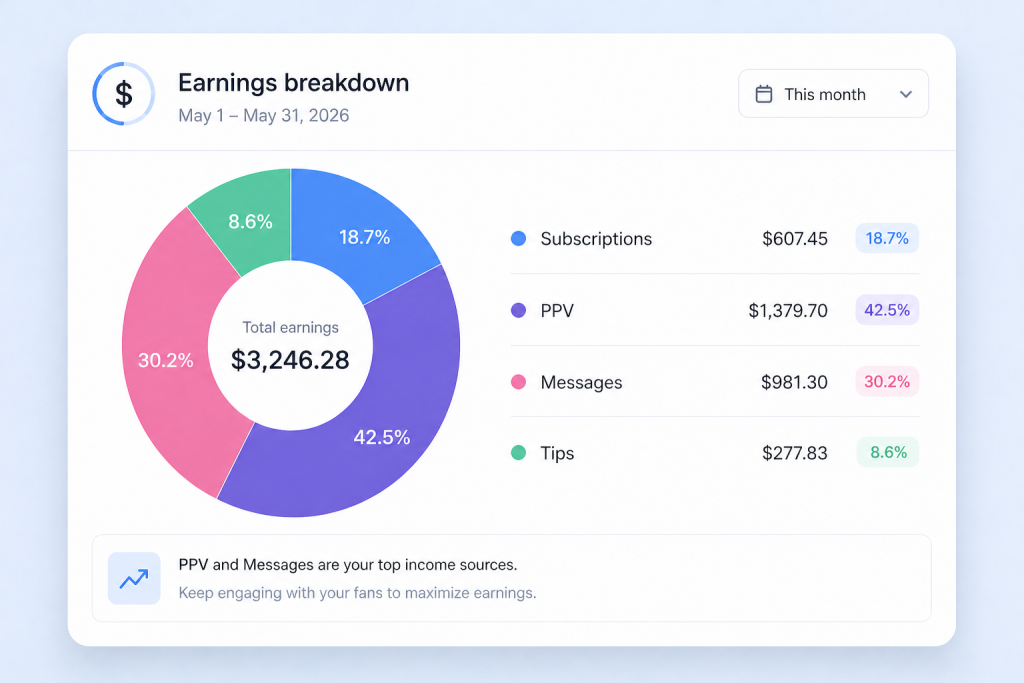
The OnlyFans revenue model on the creator side is not about one income source. It’s a mix. The difference between someone making $200 and someone making $20,000 usually comes down to how these streams are combined, not which one they pick.
Subscriptions
This is the entry point. Most creators price access between $5 and $15 to reduce friction. It works like a membership: predictable, recurring, but limited in upside on its own. A page with 300 subscribers at $10 brings $3,000 monthly before the platform cut. Stable, but not explosive.
PPV content
Pay-per-view is where things start scaling. Instead of posting everything on the feed, creators lock premium content behind messages or posts. Prices usually sit between $10 and $50. Even with a small audience, a well-timed drop can outperform subscription income in a day.
Tips
Tips are less predictable but surprisingly consistent over time. They come from live streams, personal interactions, or simple appreciation. Some fans tip a few dollars, others go much higher. It’s not a core strategy, but it adds noticeable extra revenue.
Paid messages / custom content
This is often the highest-margin stream. Custom videos, private chats, and exclusive requests can range from $20 to $200 or more. The volume is lower, but the value per transaction is significantly higher than anything else on the platform.
Bundles & upsells
Bundles combine multiple pieces of content into one offer, usually at a slight discount. It increases average order value and works well for retention. Instead of selling one item for $15, creators package three for $30 and move more volume without lowering perceived value.
Revenue Streams Comparison
| Revenue Stream | Typical Price | Conversion Rate | Stability | Margin Potential | Best Use Case |
| Subscription | $5–$15 | High | Stable | Medium | recurring base |
| PPV | $10–$50 | Medium | Variable | High | scaling income |
| Tips | $1–$100 | Low | Unstable | Medium | engagement |
| Paid messages | $20–$200 | Low | High | Very high | top fans |
| Bundles | $30–$200 | Medium | Medium | High | retention |
Looking at this, one thing becomes obvious: no single stream carries the whole business. Subscriptions bring consistency, but they cap out quickly. PPV and paid messages generate larger payouts, but they depend on timing and engagement. Tips add volume, but they’re unpredictable.
That’s why most high earners don’t rely on one method. They combine a stable base with high-margin extras. Subscriptions keep the cash flow steady. PPV and messages increase average spend. Bundles help squeeze more value out of existing fans.
A hybrid setup like this spreads risk and improves total revenue per user, which is exactly how the model scales beyond a small creator page into something that feels like a real business.
Real Earnings Example
To see how the OnlyFans revenue model really scales, you need to look at fan behavior, not just totals.
Take the same creator with 500 subscribers at $10:
- Base revenue: 500 × $10 = $5,000
Now break the audience into segments:
- 50 “high spend” fans (10%)
→ spend ~$50/month on PPV and messages = $2,500 - 150 “medium spend” fans (30%)
→ spend ~$10/month = $1,500 - 300 passive fans
→ subscription only = $0 extra
Extra revenue = $4,000
Total gross = $9,000
Platform cut (20%) = $1,800
Net = $7,200
Now it makes sense why PPV and messages drive profit.
Subscriptions bring volume, but upsells bring margin. A small group of engaged fans generates a disproportionate share of income. In many cases, 10–20% of the audience creates over half the revenue.
That’s the real lever inside the model. Not more followers, but higher spending per user.
OnlyFans Financial Scale & Market Reality
To understand how big the OnlyFans revenue model really is, start with verified platform-level data. In 2024, users spent about $7.2 billion on OnlyFans, while the company reported roughly $1.4 billion in revenue and around $684 million in profit. The platform has over 377.5 million users and more than 4.63 million creators. These OnlyFans financials highlight a system built on massive transaction volume rather than subscriptions alone.
Despite handling billions, the company operates with a relatively small team, which leads to extremely high OnlyFans revenue per employee, estimated in the range of $14–15 million annually, depending on how staffing is calculated.
However, creator-side outcomes look very different.
While the platform generates billions, income distribution is heavily concentrated:
- Top creators earn around $146,000+ per month
- Average earnings stay low, around $150–180 per month
- Revenue per subscriber averages just $2.06
- A paying fan spends about $48.52 per creator
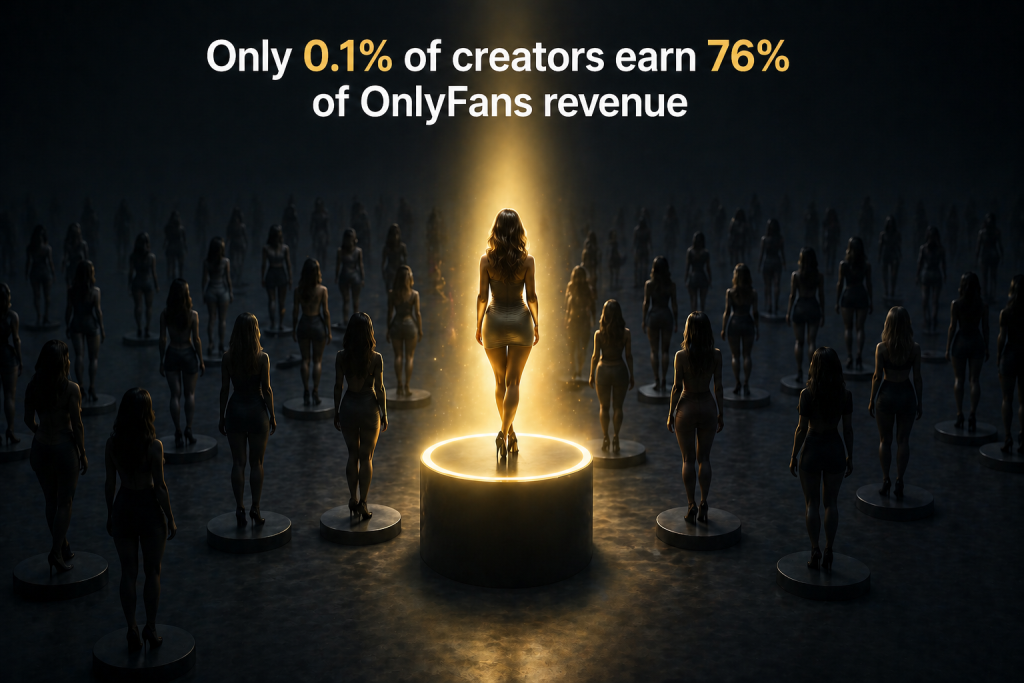
The top 0.1% of OnlyFans creators earn about 76% of all revenue on the platform.
This is where the model becomes tricky. It’s not a level playing field. Most creators don’t fail because the system doesn’t work, but because the competition is extremely top-heavy.
For anyone building around this model, the takeaway is simple: success depends less on joining the platform and more on how well you monetize a small group of high-spending fans.
Limitations That Affect Revenue Stability
The OnlyFans revenue model works well when everything runs smoothly, but it comes with structural limits that affect long-term stability. These aren’t edge cases. They shape how predictable your income really is.
- Platform dependency
our audience lives on the platform, not with you. If access changes, you lose direct control over your buyers. - Fixed 20% fee
The cut applies to every transaction. As revenue grows, so does the amount you give away. - Weak discoverability
OnlyFans doesn’t function like a social network. There’s little organic reach, so growth depends on external traffic. - Payment restrictions
Certain regions, banks, or content types can trigger limitations, affecting how and when you get paid. - Account risk
Policy changes or moderation decisions can impact accounts quickly, which puts revenue streams at risk.
These constraints don’t stop earnings, but they make the system less predictable than it looks at first glance.
New Monetization Trends

The OnlyFans revenue model is shifting away from simple paid pages toward more layered setups. A common move now is starting with a free page and turning it into an upsell funnel. Entry becomes frictionless, which brings in a larger audience. Revenue then comes from what happens after: locked posts, paid messages, and targeted offers.
Spending patterns are also being used more deliberately. Instead of treating all fans the same, creators separate casual buyers from high spend users and adjust pricing around that behavior. Someone who regularly buys content sees different offers than someone who only subscribes once.
Bundles have become more refined as well. Instead of random packs, creators group content around themes or time-limited drops, which increases urgency and average spend. At the same time, more traffic is pushed outside the platform through social media and personal channels, turning OnlyFans into one part of a broader funnel rather than the whole business.
Building a Business Plan Around This Model
A solid business plan for OnlyFans starts with structure, not guesswork.
- Mix revenue streams — Don’t rely on subscriptions alone. Combine them with PPV content, paid messages, and bundles. Subscriptions create stability, but upsells are what actually grow total income.
- Build repeat buyers — Focus on fans who come back and spend again. One-time purchases help, but consistent buyers drive long-term revenue. This usually comes from personalized content and regular engagement.
- Focus on retention — Keeping an existing subscriber is easier than finding a new one. Consistent posting, timed offers, and interaction all increase how long people stay and how much they spend.
- Avoid a single income source — Even a strong stream can drop suddenly. A balanced setup spreads risk and keeps earnings stable as the audience grows.
Move From Platform Dependency to Ownership With Scrile Connect

At some point, the limits of the OnlyFans revenue model become obvious. You build an audience, but you don’t fully control it. Payments, rules, and fees all sit on someone else’s platform. That’s where shifting to ownership starts making sense.
Scrile Connect solution offers a way to run the same business model under your own brand, without giving up 20% on every transaction. It’s not a marketplace. It’s a white-label system you control under your brand.
Instead of adapting to platform rules, you define your own monetization:
- subscriptions and tiered access
- PPV content and premium drops
- tips and direct fan payments
- private messages and custom content
- live streaming and paid sessions
Everything runs on your domain, with your payment setup and user data. That changes the economics completely. Instead of sharing revenue, you keep it and shape the experience around your audience.
Choosing the Right Monetization Approach
| Scenario | Best Revenue Model | Why It Works | Risk Level |
| Beginner creator | Subscription + tips | easy entry, stable | low |
| Growing creator | Subscription + PPV | scalable income | medium |
| Top creator | PPV + messages | high margin | high |
| Studio / business | Hybrid model | diversified revenue | medium |
| Own platform | Full custom model | no platform fees, full control | setup complexity |
Conclusion
The OnlyFans revenue model works best when you treat it like a system, not a single income stream. Subscriptions cover the baseline, but real growth usually comes from what happens after someone joins. Fans who buy PPV, request custom content, or tip regularly end up driving most of the revenue. That’s why two creators with the same audience size can earn completely different amounts.
But there’s a ceiling built into the setup. A fixed platform fee, limited control over users, and heavy competition at the top all make long-term growth less predictable than it looks at first.
If you’re thinking beyond short-term income, it’s worth looking at options where you control the rules. Take a look at Scrile Connect solutions if you want to build your own platform, set your own pricing, and work directly with your audience without relying on marketplace limitations.
FAQ
How does the OnlyFans revenue model work?
The OnlyFans revenue model is based on direct fan payments through subscriptions, PPV content, tips, and paid messages. The platform processes transactions and keeps 20%, while creators receive the remaining 80%.
What is the average income of an OnlyFans creator?
Most creators earn relatively small amounts, often around $150–180 per month. Income varies widely depending on audience size, engagement, and use of upsells like PPV and custom content.
Are most OnlyFans creators highly profitable?
No, earnings are heavily concentrated among a small group of top creators. A large percentage of total revenue is generated by a tiny fraction of accounts, while many creators earn modest income.
How much do beginners typically earn on OnlyFans?
Beginners often earn little at the start, especially without an existing audience. Earnings improve when creators combine subscriptions with PPV, tips, and direct interactions.
Which revenue stream generates the most profit?
Paid messages and custom content typically generate the highest margins because they involve direct interaction with fans. PPV content can also outperform subscriptions when engagement is high.
Do creators rely only on subscriptions?
No, successful creators use multiple income streams. Subscriptions provide a base, while PPV content, tips, bundles, and private messages drive additional revenue.
What percentage does OnlyFans take from creators?
OnlyFans takes a fixed 20% commission from all creator earnings. The remaining 80% is paid out to the creator after processing fees.
Can you build your own platform similar to OnlyFans?
Yes, it is possible to build a platform with similar monetization features such as subscriptions, PPV, and messaging. Using a white-label solution allows full control over branding, payments, and user data.

Polina Yan is a Technical Writer and Product Marketing Manager at Scrile, specializing in helping creators launch personalized content monetization platforms. With over five years of experience writing and promoting content for Scrile Connect and Modelnet.club, Polina covers topics such as content monetization, social media strategies, digital marketing, and online business in adult industry. Her work empowers online entrepreneurs and creators to navigate the digital world with confidence and achieve their goals.