
Subscription pricing strategy is a structured approach to defining how a business charges recurring fees for ongoing access to its product, service, or content. Subscription services will emphasize designing a pricing model based on the perceived value and level of engagement of their users.
There will be three primary considerations in developing this subscription pricing strategy, which are to establish an appropriate perceived value, create customer segments, and optimize revenue generation. Instead of setting a single price, you need a model that can scale over time.
How to Improve Subscription Pricing Fast?
The following list summarizes current best practices:
- Implement value-based tiered pricing versus just one price point.
- Offer a no-risk entry via a free trial or low-cost first-month option.
- Add a bundle offering to increase the amount of value perceived by customers.
- Continue to test or iterate your customer interface around the purchase (timing, layout, and messaging) of your subscription.
- Measuring key metrics and having a process in place that allows you to iterate quickly on this data
In other words, strong subscription pricing is not about finding a “perfect number.” It’s about aligning price with user intent at different stages.
Subscription Pricing Strategy Is Not Guesswork

A common misstep that I witness repeatedly is using intuition to determine pricing. You compare your price to your competitors, come up with a number that “feels good,” and then you go about your business. However, proper pricing isn’t determined by your instincts; it is formulated based on a structure.
When creating an effective subscription pricing strategy, you need to understand three key components: value, audience segments, and the paywall experience. If any of these elements are missing, your results will fall short. If all three components are satisfactory, then conversions will increase. Let’s look at each of these components.
Why Value Beats Price Every Time
Your price is evaluated not on its own but in relation to what the customer believes they are acquiring in return for their price. Customer perception is what determines whether your price converts.
If the product that you are offering appears to be a commodity, then regardless of how low it is priced, it will not be a successful option for the customer to buy. And if your product is delivered as a clearly defined value, and that value is exclusive content, then your interactions will justify your higher pricing.
The point is, the success of a creator’s ability to charge for their products can be based on the individual creator; they can successfully offer different pricing for access as opposed to an experience.
Segmentation: Different Users, Different Prices
Not all users behave the same way. Some are just exploring. Others are ready to spend more for deeper access. Yet many creators still rely on a single subscription pricing model, which forces everyone into the same box. Growth is hampered by these methods of pricing.
You should price according to user intent:
- Entry-level users → Free or low-cost trial or other little outlay gateways.
- Engaged users → Normal membership.
- High-value users → Premium memberships or extras.
When pricing matches with the cause of the user’s intention to purchase, the number of conversions will then naturally improve.
Paywall UX: The Hidden Multiplier
A weak paywall UX can make your business unsuccessful even if you are charging a competitive price. Aspects such as the order in which you display your pricing, how you visually highlight your “most popular” plans, and how often and when you trigger your paywall are going to shape users’ perceptions of your offer. Oftentimes, the actual improvement of your user experience can produce more of an increase in sales than actually relative to changing the price.
So, instead of asking how to price a subscription service, ask a better question: how do users experience and understand your pricing? That shift in thinking is where real optimization begins.
Subscription Pricing Models That Work

Not all monetization setups perform equally. In fact, the difference between a struggling creator and a high earner often comes down to choosing the right structure. That’s where subscription pricing models become critical. Instead of relying on a single format, top creators combine multiple approaches. This allows them to capture different types of demand without forcing users into one rigid path.
Core Subscription Pricing Model Types

Here, we will look at the most profitable models.
- In a tiered pricing model, there are a variety of offerings at various price levels. Due to its flexibility, this is one of the most common ways that consumers can choose from many cost options based on what they can afford or like.
- Freemium and paywall. This is a good way to grow an audience quickly; however, a well-thought-out upsell strategy will be needed to convert users to premium subscriptions.
- A usage-based model is a breakdown of users paying for a specific action, such as sending messages or accessing exclusive content. This model works well with a large, active, engaged user base.
- The hybrid model uses a combination of a subscription-based service and a pay-per-use service. This type of model often gives the most revenue, since the customer is on a recurring basis, plus there are upsell opportunities for services provided by tiered and freemium types of pricing structures.
Each subscription pricing model has its place. The key is not choosing one — it’s combining them strategically.
Subscription Pricing Examples in Action

To make this more concrete, here are a few subscription pricing examples that consistently perform well in the adult creator space:
Example 1: Tiered access
- Basic: $5 per month for access to basic content.
- Premium: $15 per month for access to all premium content ($15 for premium content and early access to new releases).
- VIP: $30 per month provides exclusive VIP rewards (like monthly private live streams) for loyal fans and creators alike.
Example 2: Freemium funnel
- Free membership allows the new member to create a profile with limited access to teaser content only (the creator also earns for signing up the new member).
- When the new member pays for an annual subscription, they will gain full access to the creator’s entire video library of content plus all of the creator’s content, including past premium content that will now be available as PPV.
- And when the creator releases new premium content, the creator also sells PPV to members who are willing to pay to see the new releases before the general public.
Example 3: Hybrid monetization
- $10 per month for access to a subscription-only private channel + option for the member to purchase additional creator’s content + opportunity to purchase custom content.
- The hybrid pricing model includes bundled offers and discount rates for loyal users for support and loyalty.
So, the commonality in high-performing creators is that they do not depend upon any one type of revenue. Instead, they offer multiple pricing tiers that evolve with the user experience and therefore have additional monetization opportunities for all users.
Therefore, the bottom line for you is this: pricing is not meant to be static; it is meant to be flexible by being adaptable to the ever-changing marketplace and create multiple sources of revenue streams for all producers.
How to Determine Subscription Price Based on Value

If you’re still asking how to determine subscription price, you’re already thinking in the right direction. Here’s where the subtlety comes into play—you do not lead with price. You begin with your perceived value and then work backwards from there.
An overwhelming number of creators set their pricing in relation to their competition, which is a great shortcut; however, this will not typically yield you the best results. Your audience and the way you create and engage with them are very different from anyone else; therefore, setting your pricing in relation to others will not yield you the best results.
Value-Based Pricing Framework
At its core, value-based subscription pricing means aligning what users pay with what they believe they’re getting. That perception is shaped by both tangible and emotional factors.
- Core value. What users will receive—content size, exclusiveness, and level of access.
- Experience value. How the user experiences it—personalization, connection, and responsiveness.
- Scarcity value. The reason this strategy is relevant now — Limited drop(s), exclusive tiers, and time-sensitive offers.
Once you define these, segment your audience:
- Low intent—Requires a low-risk entry point.
- Medium intent—Ready for regular monthly subscriptions.
- High Intent—Wants to pay for exclusivity and focused attention.
This is the point at which pricing will become more strategic rather than reactive.
How to Price a Subscription Service for Maximum Conversion

Once you understand value, the next step is execution. This is where many creators hesitate. They know their offer has potential, but they’re unsure how to price a subscription service in a way that actually converts. The answer lies in three levers: trials, bundles, and controlled promotions.
Trial Logic That Converts
A trial is more than just being ‘nice-to-have’—it is one of your most powerful entry points into your funnel; however, trials need to be structured effectively to provide maximum benefit to you.
You can provide either the following:
- Free trials – reduce the amount of friction in your sign-up process, therefore increasing the number of users that sign up.
- Paid (low cost) trials—filter out users that have no intent to purchase.
Typically, shorter-length trials (1-3 days) convert better because they create urgency. Long-length trials may convert better with a strong, guiding hand on how to find and utilize your paid value, but that is less common.
It is also important to consider the timing of your paywall. If it appears at too early of a stage in the process, users will likely bounce from it. If the paywall appears too late, they may use your product and continue not to purchase it.
Bundle Offers That Increase ARPPU
Revenue scales when you bundle value instead of selling access alone. Bundles allow you to provide multiple value elements in one offer instead of just the access.
For example:
- Subscription + exclusive content pack.
- Subscription + priority messaging.
- Subscription + limited-time bonus content.
Using bundles shifts the conversation with users away from “price” to “value.” This is a significant psychological shift. Your users stop asking, “Is it expensive?” and now how do I get a good deal?
Metrics That Define Subscription Pricing Success

At this point, your pricing structure is in place. But without measurement, you’re still operating blind. Strong subscription pricing is always tied to clear performance metrics. You don’t need dozens of KPIs. A focused set of numbers will tell you exactly what’s working — and what isn’t.
Key Metrics and Benchmarks
| Metric | What it measures | Healthy range | Optimization lever |
|---|---|---|---|
| Trial → Paid | Conversion efficiency | 20–40% | Trial UX, entry pricing |
| ARPPU | Revenue per user | Increasing trend | Bundles, upsells |
| Churn | Retention stability | <10% monthly | Content quality, pricing fit |
| LTV | Total user value | Growing over time | Retention + expansion |
How to Read These Metrics
Here’s the important part. Don’t look at these numbers in isolation.
For example:
- High conversion + low ARPPU → pricing too low
- Low conversion + high ARPPU → entry barrier too high
- High churn → mismatch between price and delivered value
This is where your subscription pricing model either proves itself — or breaks.
The goal is balance. You want strong conversion, steady retention, and growing revenue per user. When all three move in the right direction, your pricing system is doing its job.
Why Value-Based Pricing Wins
“The most profitable pricing strategies put customer value front and center, are driven by data, and match your customers’ purchasing and usage habits.” — Paddle Blog
This idea is especially important in creator-driven businesses. Why? Because perceived value is highly emotional.
In adult creator ecosystems, users aren’t just paying for content. They’re paying for:
- attention;
- exclusivity;
- connection;
- access.
That’s why rigid pricing structures often underperform. They ignore emotional drivers and focus only on access.
The most successful creators treat subscription pricing models as dynamic systems, not fixed numbers. They test, adjust, and refine continuously.
Scaling Subscription Pricing Strategy With Scrile Connect
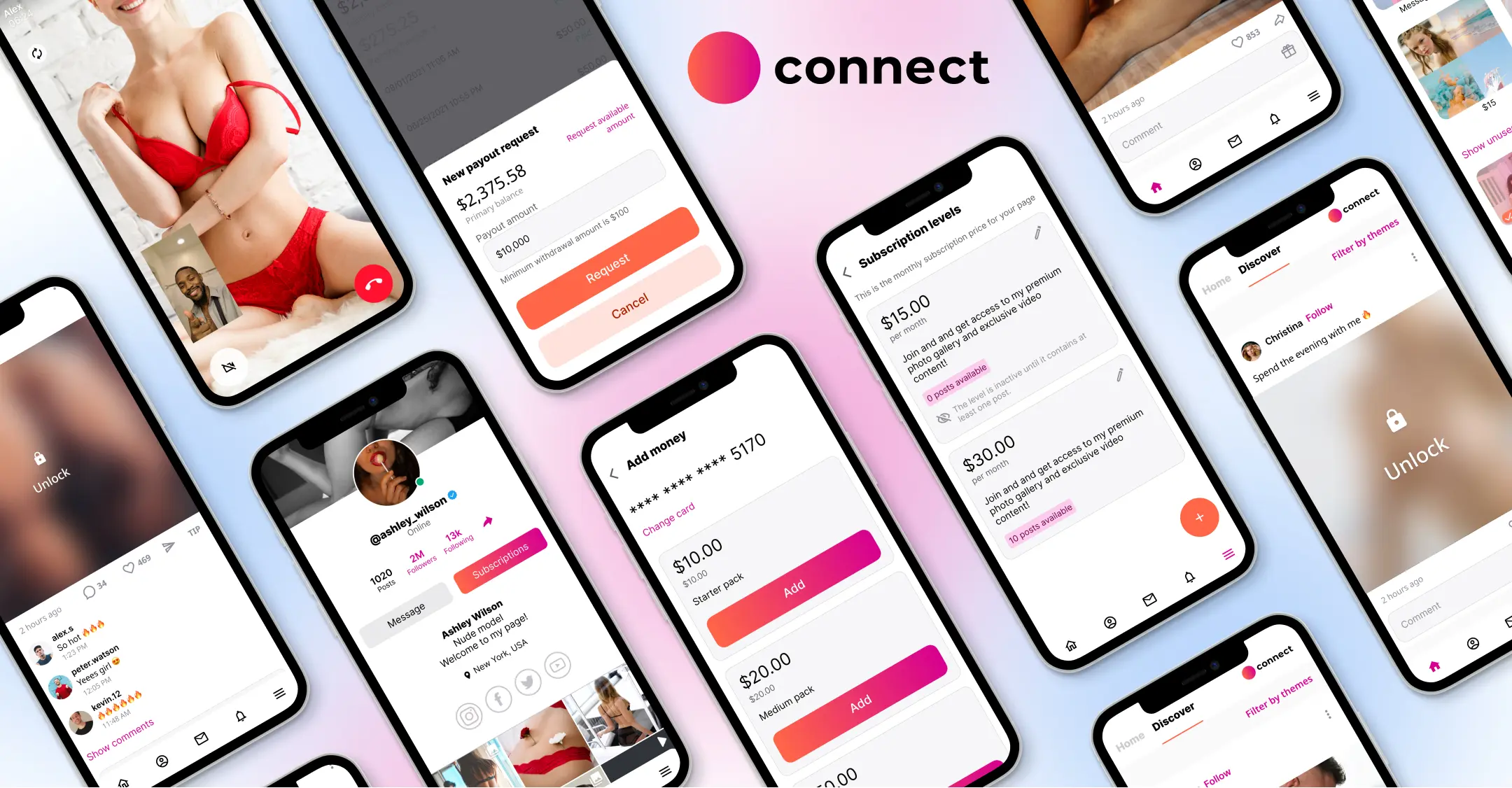
Once you grasp the mechanics, the next hurdle is implementing the knowledge you have on execution. And many times, it is at this point that many creators get stuck. They may know what to do, but they cannot determine how to execute their knowledge without completely rebuilding their entire platform from scratch. This is precisely where Scrile Connect comes in.
Instead of locking you into a rigid setup, Scrile Connect gives you control over your monetization structure. You can test, adjust, and evolve your pricing without disrupting your entire platform.
What You Can Do With Scrile Connect
- Create several different levels of subscription.
- Quickly roll out, modify, and analyze the response to various pricing models.
- Integrate both PPV and bundled subscriptions with your subscriptions.
- Change your paywall rules without the need for technical resources.
- Monitor user activity and revenue-generating data.
Pricing changes constantly, so top-performing highlight creators don’t just “set and forget” their pricing but rather are continuously running iterations on it.
Explore Scrile Connect
FAQ: Subscription Pricing Strategy for Creators
What is a subscription pricing strategy?
Developing a subscription pricing strategy is creating a plan on how to charge customers a recurring fee to receive goods or services from your company or brand. The subscribers’ characteristics will determine pricing based on the value created by them, the way they interact with the business, etc. You’ll build a structure that links your pricing model to the perceived value created by the subscribers you gain.
In other words, when considering a pricing strategy for subscriptions, rather than simply asking yourself, “How much do I want to charge?” think: “How much do people actually value my product or service?” Characteristics will determine pricing based on the value created by them and how they interact with the business. You’ll build a structure that links your pricing model to the perceived value created by the subscribers you gain.
How to determine subscription price?
The key elements to determine your value proposition:
• Production costs.
• Customer acquisition cost (CAC).
• Competitors’ benchmarks (serve as a comparison only).
• Perceived value of both the content and the access.
Add customer segmentation: not all subscribers will have the same willingness to pay. Some will want basic access, while others value exclusivity or direct interaction.
A simple way to implement a value-based pricing strategy:
• Low (entry) tier → Basic access.
• Mid (Core) tier → Core subscription.
• High (premium) tier → Premium experience.
This structure allows you to test different price points without risking your entire funnel and evolve toward a data-driven pricing model.
Why do most subscription pricing models fail?
Paywall design significantly impacts pricing performance. Even a well-calculated price can underperform if users don’t understand the value.
Key considerations:
• Which tier is shown first (anchors perceived value).
• Highlighting the most affordable option visually.
• Timing of the paywall during user engagement.
• Clear communication of each tier’s value.
A well-designed paywall frames user decisions and increases conversions without changing the price itself.
Can subscription pricing be tested and optimized over time?

Polina Yan is a Technical Writer and Product Marketing Manager at Scrile, specializing in helping creators launch personalized content monetization platforms. With over five years of experience writing and promoting content for Scrile Connect and Modelnet.club, Polina covers topics such as content monetization, social media strategies, digital marketing, and online business in adult industry. Her work empowers online entrepreneurs and creators to navigate the digital world with confidence and achieve their goals.