
Quick answer
To stay anonymous as an adult content creator, build a separate creator identity rather than merely hiding your face. Use distinct contact details, accounts, devices or device profiles, payment workflows, visual settings, and fan boundaries. Remove metadata before publishing, keep legal details away from public pages, and audit every service that handles them. You may remain anonymous to fans, colleagues, and casual searchers, but not necessarily to payment, tax, age-verification, or legal entities.
How to stay anonymous as an adult content creator: choose the right promise
The realistic goal is audience anonymity: fans and casual searchers cannot easily connect your creator persona to your legal identity. Total anonymity is rarely compatible with receiving regulated payments, filing taxes, verifying age, or enforcing contracts.
Begin by deciding whom you need protection from. A curious coworker, persistent subscriber, abusive former partner, data broker, and legal authority have different access and motivation. Write down the people who must not connect your identities, what they already know, and the damage a connection could cause. This turns a vague wish to “be private” into an operating requirement.
Treat identity as three layers. Your public persona includes your stage name, visible appearance, voice, niche, and published content. Your operating identity covers creator email, phone number, devices, domain, social accounts, and business records. Your legal identity belongs only where verification, banking, taxes, contracts, or age records require it. Anonymity fails when one convenience joins those layers: a reused username, synced contacts, familiar bedroom, or personal recovery email.
Choose a privacy level you can maintain. A faceless creator with no live contact can use strict visual and communication boundaries. A performer who sells calls or streams must manage voice, mannerisms, surroundings, and spontaneous disclosures. If your offer depends on personal intimacy, the operating system must carry more of the privacy burden. The useful implication is simple: define your anonymity promise before choosing content formats or promotion channels.

Build a privacy threat-model worksheet
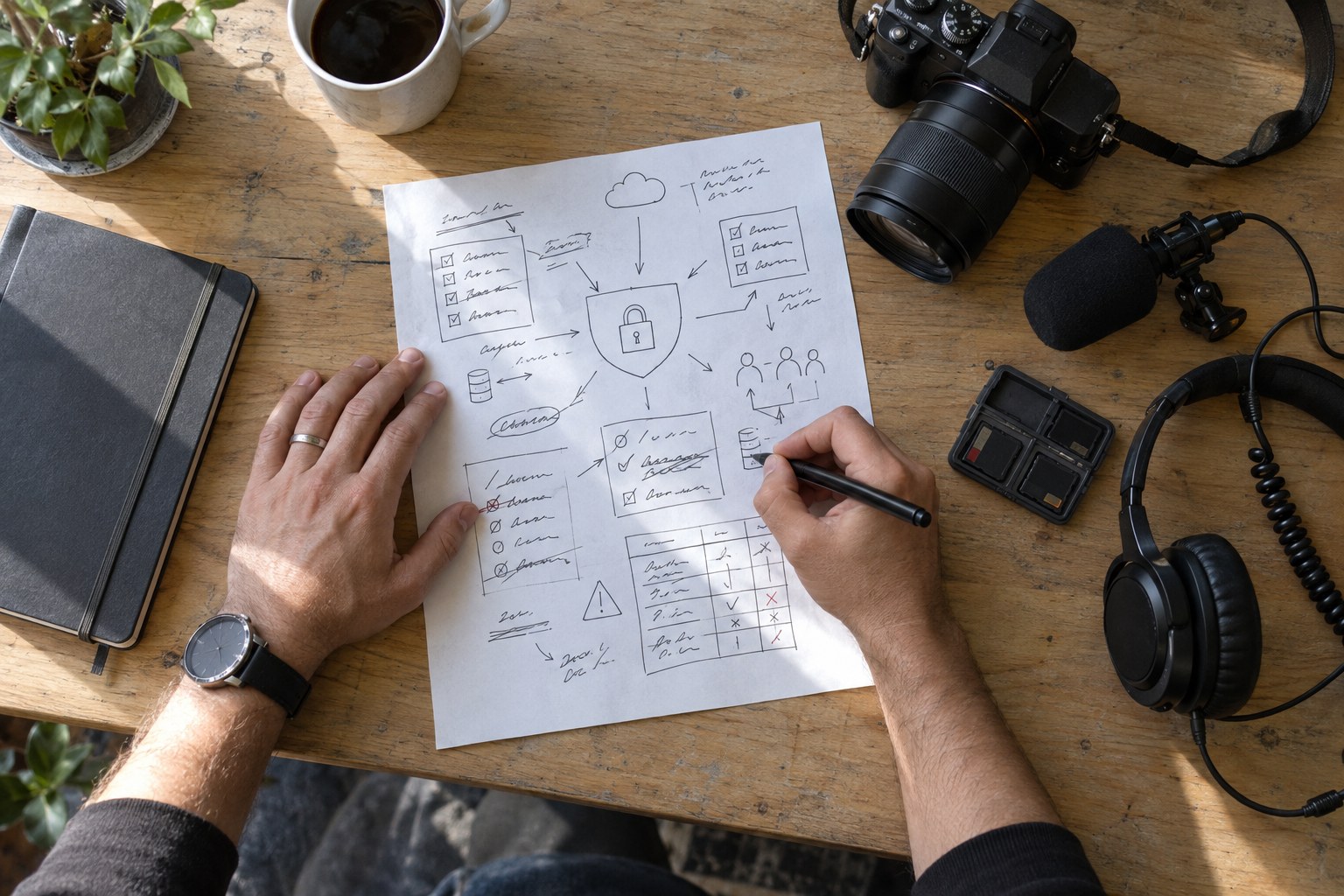
Audit every identifying signal and assign one action: separate it, remove it, monitor it, or consciously accept it. The worksheet matters because anonymity is lost through combinations of small clues, not only through a displayed legal name.
| Signal | Typical exposure | Primary action | Verification |
|---|---|---|---|
| Legal identity | Verification, tax, and banking records | Separate | Confirm it is absent from public profiles and receipts |
| Domain and email | Registration data, recovery addresses, signatures | Separate | Search the public site and registration record |
| Payments | Statement descriptors, invoices, payout accounts | Separate | Run a test purchase and inspect both sides |
| Media files | Location and device metadata | Remove | Download the published file and inspect it |
| Background and body | Windows, mail, tattoos, reflections, landmarks | Remove | Review frames enlarged and without sound |
| Social accounts | Reused handles, contacts, recommendation systems | Separate | Search aliases and inspect discovery settings |
| Fan contact | Voice clues, routines, personal answers | Monitor | Review message logs and boundary violations |
For each row, record the service involved, who can see the signal, the consequence of exposure, the control owner, and the test that proves the control works. “Use a stage name” is not a test. Searching that alias alongside old handles, checking purchase receipts, inspecting domain records, and reviewing a downloaded upload are tests.
Prioritize signals that are public, searchable, reusable, and hard to change. A unique tattoo paired with a familiar room is more dangerous than either clue alone. A legal identity held privately by a required provider is sensitive, but it is not automatically public exposure. Your next action is to complete the worksheet before opening another promotional account.
Work through one creator privacy example
A useful privacy test follows one piece of content from production to payment and support. If a personal identifier enters anywhere along that route, fix it at the earliest point rather than asking every later tool to conceal it.
Assumptions: Maya uses a stage name, hides her face, sells glamour photo sets and private messages, works from home, promotes through separate social accounts, and wants protection from coworkers and casual fans. She accepts that identity, payment, tax, and age-verification providers may require her legal details. Her promise is therefore public separation, not invisibility from regulated services.
- Capture: Maya disables location recording where possible, uses a plain movable background, covers distinctive tattoos, and checks mirrors, windows, packages, and notifications before shooting.
- Prepare: she transfers files through a creator-only workspace, exports clean copies, inspects metadata, and keeps originals outside folders used for publishing.
- Publish: she uses a new alias, creator email, unique password, separate recovery method, and domain registration configured to avoid public personal details.
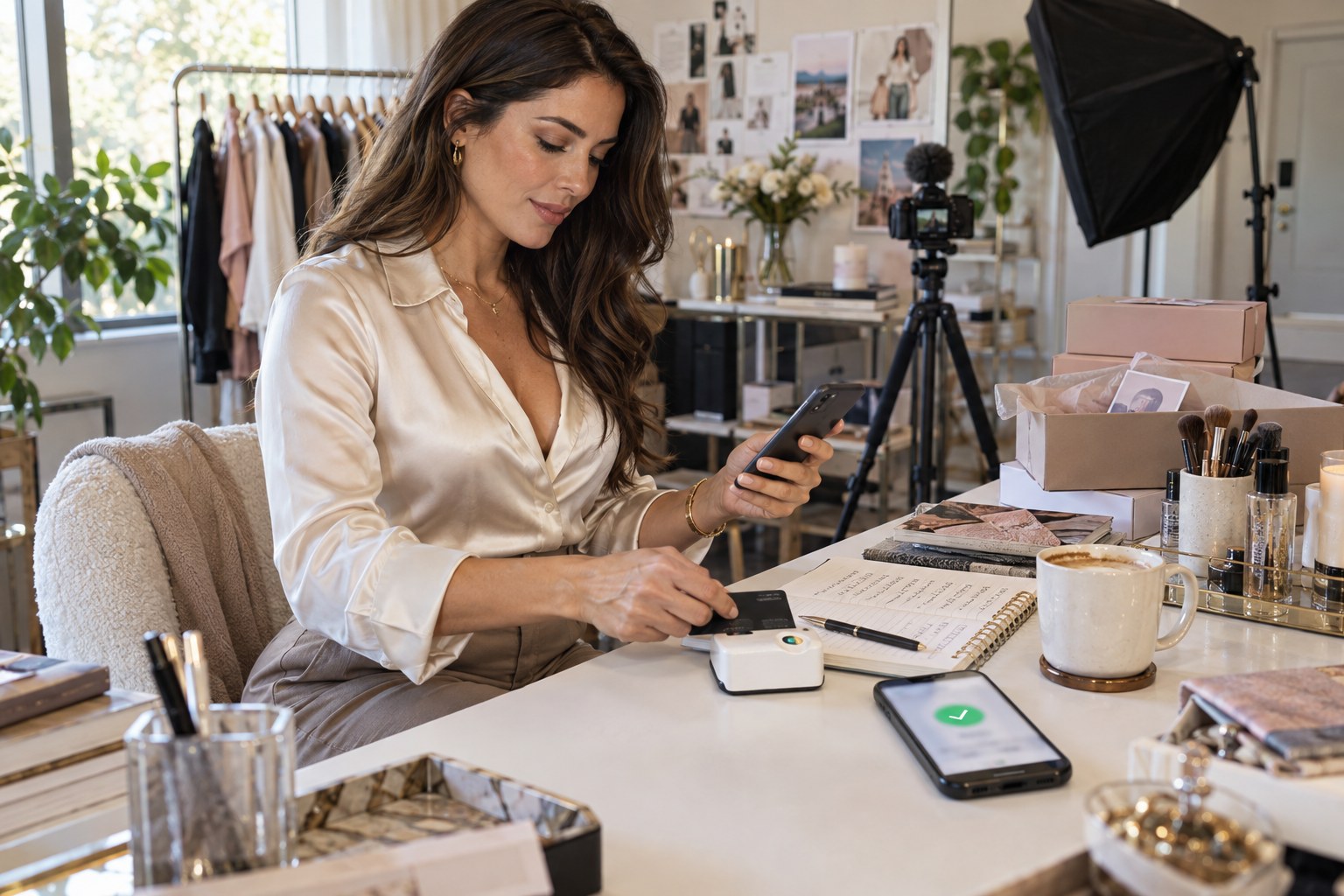
- Sell: she makes a test purchase, then checks the customer receipt, payment descriptor, confirmation email, support signature, and download filename for identity leaks.
- Monitor: she searches her alias, samples published files, documents suspicious fan questions, and records corrective actions in the worksheet.
Privacy also shapes the offer. Maya favors prerecorded sets and paid messaging over unscheduled live video because those formats preserve review time. She can still study how to promote adult content, but she rejects tactics that require contact syncing, real-time location clues, or recycling personal profiles. The implication is commercial: the safest promotion channel is the one whose discovery mechanics match her threat model.

Know where anonymity stops working
Anonymity cannot guarantee that nobody will identify, copy, or expose you. It reduces discoverability and limits the clues you release; it does not control facial recognition, determined acquaintances, breaches, piracy, subpoenas, or another participant's behavior.
Do not conceal your identity or age from services that lawfully require verification. Keep accurate consent, identity, tax, and business records where applicable, but restrict access and avoid placing them in public-facing folders or tools. Requirements vary by jurisdiction and content type, so obtain qualified legal and tax advice for your situation. A stage name is a public boundary, not a substitute for compliance.
Visual anonymity also has limits. Face covering does not hide tattoos, scars, voice, accent, body jewelry, home layout, weather outside a window, or a routine mentioned in chat. Other performers add consent and recordkeeping duties as well as another person who can disclose details. Creators considering how to get in the porn industry should decide these boundaries before collaborating, not while a camera is waiting.
Publishing under an alias does not stop copying. Preserve original files, dates, permissions, and agreements, and understand adult content licensing before granting reuse rights. Separate privacy from ownership: one limits connections to you; the other establishes what others may do with the work. If being identified would create an unacceptable safety or employment consequence, anonymous adult creation may not fit your risk tolerance.

Plan for failure while calm. Keep evidence of impersonation or threats, define which accounts can be paused, know how fans receive updates, and decide who can help without gaining unnecessary access to your legal identity. If a collaborator or manager is involved, document permissions and revoke them when the relationship ends. An adult creator management platform may centralize operations, but access should still follow roles rather than trust alone. The limitation worth accepting is inconvenience: a separate login takes seconds; repairing a collapsed identity boundary takes considerably more than annoyance.
Implement anonymity as a repeatable operating system
Build privacy in dependency order: define the persona, separate infrastructure, clean production, verify the buyer journey, set interaction rules, and monitor exposure. Opening public accounts before these foundations merely creates more places to repair.
- Write the threat model: protected identity, likely adversaries, unacceptable outcomes, and accepted disclosures.
- Create unique creator contact details, credentials, recovery methods, storage, and device separation appropriate to your risk.
- Set up the domain, public pages, payment path, support identity, legal records, and access permissions; disclose accurate information privately where required.
- Create a pre-publish checklist for metadata, backgrounds, reflections, body identifiers, filenames, audio, and collaborator consent.
- Test discovery, signup, purchase, receipt, download, cancellation, support, and account recovery from the fan's perspective.
- Set message boundaries for personal questions, gifts, meetups, location, calls, and harassment; use prepared responses instead of improvising.
- Schedule recurring alias searches and repeat the worksheet whenever your tools, team, location, or content format changes.
Platform choice comes after this design. If you plan to move from OnlyFans to your own website, map which privacy controls and records must migrate before announcing the new destination. Owning a domain can improve control over branding, pricing, policies, and customer experience, but it also makes you responsible for configuration, moderation, verification support, and safe administration.
Your verifiable next action is a complete test transaction using a buyer account you control. Inspect every page, email, descriptor, filename, reply, and recovery flow. Record each signal in the worksheet as separate, removed, monitored, or accepted. Do not launch until every accepted exposure has a named reason and every promised control has passed its test.
Turn privacy controls into platform rules
Once your threat model is documented, your monetization setup should enforce it. Scrile Connect is a white-label platform for launching a branded fan site on your own domain with subscriptions, pay-per-view content, tips, paid messages, livestreams, and private video calls. It also supports content moderation and age-verification workflows.
Owning the site does not create anonymity automatically. It does let you define branding, pricing, content policies, payment configuration, administrative access, and fan interactions around the privacy system you have chosen. That is the useful transition from a hidden profile to an operated creator business.
Frequently asked questions
Can an adult content creator be completely anonymous?
Usually not. You may remain anonymous to fans and the general public, while payment, tax, age-verification, hosting, or legal providers still know your verified identity.
Can I stay anonymous if I show my face?
You can reduce exposure, but showing your face materially weakens anonymity because acquaintances and image-matching systems may connect the persona to you.
Should I use a separate phone for adult content creation?
A separate phone provides strong operational separation. If that is impractical, use isolated accounts and profiles, disable unnecessary syncing, and keep personal contacts and recovery details out of creator services.
Does removing photo metadata make content anonymous?
No. Metadata removal closes one route, but backgrounds, reflections, tattoos, filenames, voices, social connections, and payment communications can still reveal identity.
Can fans see my legal name through payments?
It depends on the provider and configuration. Run a real test purchase and inspect the buyer's receipt, statement descriptor, confirmation email, support sender, and refund messages.
Should I use a stage name and register a business?
A unique stage name helps public separation. A business structure may help operations in some jurisdictions, but it does not erase legal, banking, tax, verification, or disclosure duties; seek local professional advice.
How often should I audit my creator privacy?
Audit before launch and whenever you change a domain, device, payment provider, team member, location, account, or content format. Regularly test the public and buyer journeys as well.
What should I do if a fan discovers my identity?
Preserve evidence, avoid escalating directly, tighten exposed accounts, change compromised details, use platform reporting processes, and seek legal or emergency help if there are threats, stalking, or extortion.

Builds SaaS platforms for content creators, agencies, and entrepreneurs. Writes about the business mechanics behind creator-economy products and how custom software actually ships.