
Quick answer
OnlyFans profile optimization means treating your native profile as the final sales surface, not a digital business card. Align the avatar and banner with the promotion that sent the visitor, state who the page is for, describe what subscribers can expect, and make the offer easy to understand. Then change one major element at a time and compare equivalent traffic periods so you learn what improved conversion instead of merely redecorating.
When does OnlyFans profile optimization matter most?
Optimize the profile when relevant visitors arrive but hesitate to subscribe. If few suitable people reach it, acquisition is the first problem; if they arrive and leave, the profile is failing to finish the sale.
Traffic and conversion are different jobs. Promotion creates curiosity; the profile must turn that curiosity into a clear decision. Start by checking intent. Visitors from a focused post, recommendation, or niche community should already have some interest. If those people still do not act, inspect the promise they encounter: Is the creator recognizable? Is the niche obvious? Can a visitor picture the paid experience? Does the offer feel current and believable? Before buying more traffic, compare your result with sensible OnlyFans conversion rate benchmarks while remembering that source quality, price, audience warmth, and profile type can make raw comparisons misleading.
| Visitor signal | Likely cause | Profile check | Best next move |
|---|---|---|---|
| Relevant visits, weak action | Unclear value | Bio and visible previews | Rewrite the promise |
| Fast exits after arrival | Message mismatch | Promo, avatar, and banner | Restore visual continuity |
| Interest but hesitation | Trust gap | Freshness and coherence | Show a credible publishing pattern |
| Subscriptions with poor retention | Expectation mismatch | Offer versus delivery | Narrow the promise |

A useful boundary is simple: do not call every slow week a profile problem. A mention in a broad meme account may create many curious taps and almost no serious buyers, while a smaller niche referral may send fewer but better-matched visitors. Review traffic sources separately before rewriting the page. If every source performs poorly, the profile deserves attention. If only one source fails, repair or stop that promotion. This prevents a common and expensive error: changing a good offer to accommodate visitors who were never likely to buy it.
How should your positioning, avatar, and banner work together?
They should answer one question in a glance: “Is this the same creator and experience I expected?” Continuity lowers doubt; positioning gives the visitor a reason to stay.
Use a recognizable avatar with a clear face, silhouette, or established persona, then let the banner widen the same world rather than introduce a new one. Match the mood, styling, color family, and level of intimacy used in the promotion that generated the visit. A polished studio banner after a casual backstage teaser can work only if the bio connects those ideas. Otherwise it feels like the visitor opened the wrong door. Your positioning should also be narrow enough to remember: glamorous cosplay with playful chats is more useful than “exclusive content,” because exclusive is a gate, not a reason to enter.
- Recognition: the profile image resembles the creator presented in promotion.
- Mood: the banner supports the same fantasy, personality, or niche.
- Boundary: visuals suggest the experience without promising content you will not provide.
- Legibility: the important subject remains clear on a small screen.
- Consistency: the bio, visuals, and previews describe one offer rather than several competing identities.
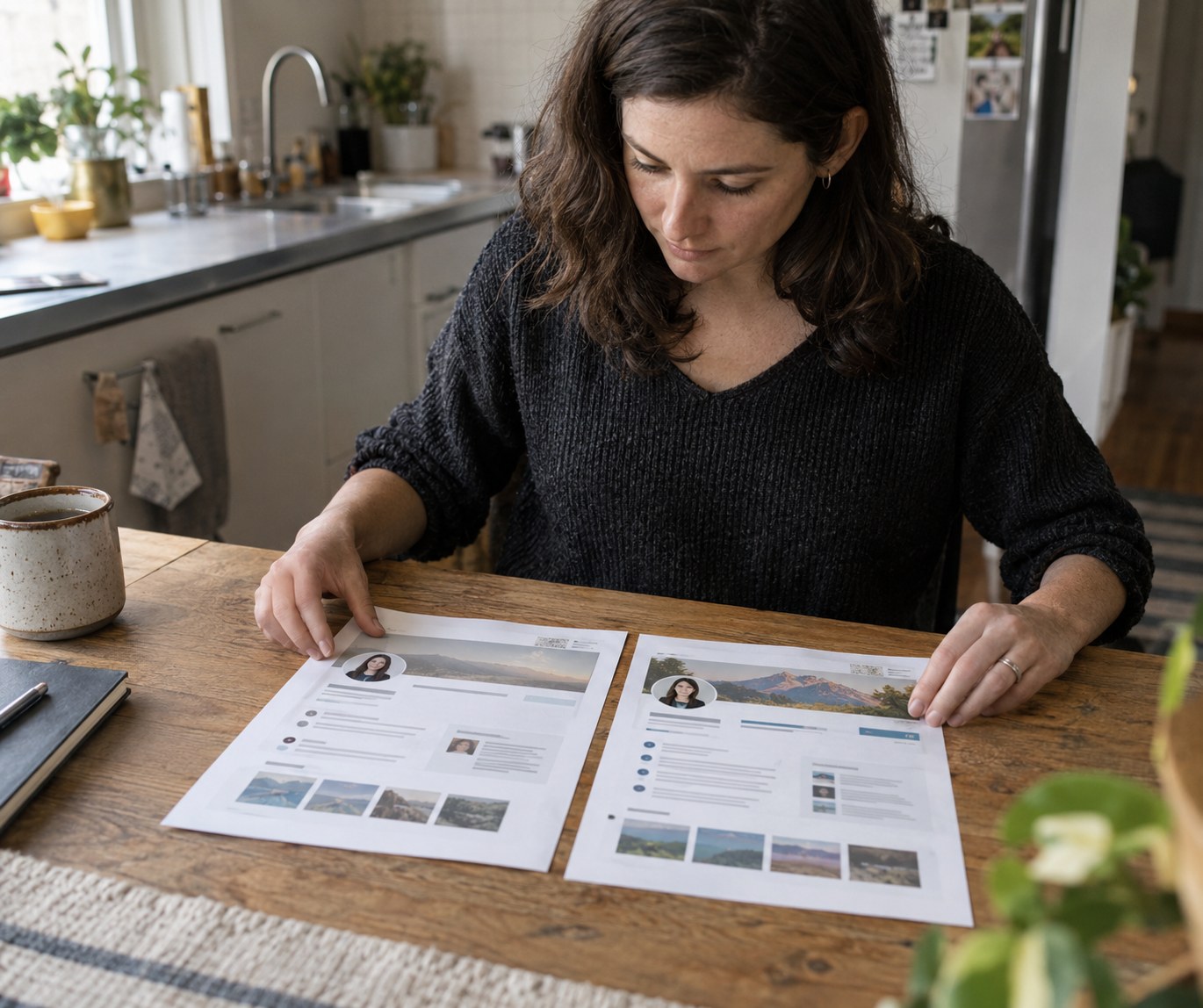
Trace the journey backward from the profile. If you promote onlyfans on instagram, compare the post, link page, and native profile side by side. The face, voice, niche, and promise should survive every step. A visitor should not have to solve a small detective case before subscribing. The next action is to choose your strongest qualified traffic source and optimize continuity for that audience first, rather than blending every channel into a beige compromise.

Consider a creator known for soft natural-light beauty content. Her best referral shows warm makeup, direct eye contact, and a relaxed bedroom setting, but her profile avatar is an old nightclub crop and the banner is a dark group photograph. Nothing is individually terrible; together they imply three different products. A better test uses a current close portrait and a wider image from the same visual world. The limitation is privacy: if face visibility is outside your boundaries, recognition can come from a consistent wig, mask, framing style, color palette, or character name instead.
What should an optimized bio and preview communicate?
The bio and visible previews must make the paid experience specific without removing all curiosity. State the content theme, interaction style, realistic publishing pattern, and meaningful boundary in plain language.
Write for a visitor deciding whether the page fits, not for an algorithm collecting adjectives. Lead with the strongest reason to subscribe. Then clarify what appears regularly, what kind of access or interaction is realistic, and what is not included when that distinction prevents disappointment. Avoid vague stacks such as “fun, wild, exclusive, and more.” They spend attention without reducing uncertainty. Preview coherence matters just as much: the visible posts should support the bio’s promise through consistent quality, personality, and recency. A premium-sounding bio beside abandoned or unrelated previews creates a trust gap.
- Name the niche or central fantasy in concrete language.
- Describe the repeatable subscriber experience, not every possible content format.
- Set an interaction expectation you can sustain without resentment.
- Explain the active offer clearly and avoid overlapping discounts that look improvised.
- Remove claims that the visible profile cannot support.
If an onlyfans landing page sits between social traffic and the native profile, give each surface one job. The landing page can route audiences or provide context; the OnlyFans profile must confirm the exact offer and close the decision. Repeating a vague slogan on both pages adds no clarity. Read the bio aloud, compare every sentence with the visible previews, and delete anything that describes an imagined future version of the account rather than the experience a subscriber can receive now.
How do you test a profile change without fooling yourself?
Hold traffic and offer conditions as steady as practical, change one meaningful profile variable, and compare like with like. The goal is learning, not producing a flattering screenshot.
Begin with a written hypothesis: “Visitors do not understand what they receive,” or “The banner breaks recognition from the referral.” Record the current profile, traffic sources, active offer, and observable outcomes before editing. Then change the element most directly connected to the hypothesis. Keep promotions, pricing, and posting rhythm stable enough that they do not swamp the result. Compare equivalent audience conditions, not a quiet period with a shoutout spike. If your OnlyFans promotion not working diagnosis mixes new traffic, a discount, a rewritten bio, and fresh visuals, improvement may be real, but you will not know what caused it.
| Stage | Decision | Evidence to retain |
|---|---|---|
| Baseline | Define the suspected friction | Profile capture and source mix |
| Change | Edit the closest variable | Exact before-and-after version |
| Observe | Keep surrounding conditions comparable | Visits, actions, and audience notes |
| Decide | Keep, revise, or reverse | Result plus plausible confounders |
Treat small or uneven samples cautiously. Audience mood, external events, content freshness, and referral quality can all shift outcomes. Do not keep a weaker profile merely because the test was tidy, and do not declare victory from a burst of unusually warm traffic. Your next action is to maintain a simple change log and make the next test answer one unresolved question.
What is the practical optimization order?
Fix promise and trust before decoration: diagnose traffic quality, align positioning, clarify the offer, support it with coherent previews, test the change, and only then spend more on acquisition.
Work in dependency order because later decisions rely on earlier ones. First define the audience and paid experience you can sustain. Next align avatar, banner, bio, and previews around that promise. Remove stale claims, conflicting identities, unclear discounts, and interaction promises that exceed your boundaries. Capture the baseline, run one controlled change, and review results by traffic source. Only after the profile converts qualified attention consistently should you revisit your OnlyFans customer acquisition cost or expand promotion. Buying more visits before repairing the final surface is simply paying to demonstrate the same problem to more people.
- Write one sentence describing the ideal subscriber and repeatable experience.
- Audit every visible element against that sentence.
- Prioritize the largest mismatch or trust gap.
- Save the current version before making one material change.
- Review comparable traffic, document the result, and choose the next hypothesis.
- Repeat the audit whenever the offer or audience changes.
Native optimization has a ceiling: you can improve how you use a platform without owning its interface, rules, customer relationship, or future direction. That does not make profile work pointless; it makes the lesson portable. Once you know which promise converts and which experience retains attention, you have the evidence needed to decide whether a branded monetization site is strategically justified.

The approach does not fit every situation. If the account lacks a consistent content practice, has unresolved compliance or verification issues, or attracts mostly irrelevant clicks, polishing the profile cannot repair the underlying operation. Likewise, a creator who changes persona every few days may need a broader brand decision before testing banners. Use the audit as a gate: if you cannot state the offer, audience, boundaries, and deliverable experience clearly, pause promotion and settle those choices first. A beautiful profile is not a substitute for a business model; it is the visible proof that one exists.
Turn a proven profile offer into an owned business
Profile optimization teaches you what people recognize, value, and buy. Once that promise is proven, the next strategic question is whether it should remain confined to a third-party profile or become an asset your business controls.
Scrile Connect is a white-label platform for launching a branded fan and content monetization site under your own domain. It supports subscriptions, tips, pay-per-view content, paid messages, private video calls, livestreams, flexible payment processing, moderation, age-verification support, and administrative tools for users, payouts, earnings, and analytics. It suits creators, agencies, and founders ready to operate their offer as an independent platform rather than another rented profile.
Frequently asked questions
What is OnlyFans profile optimization?
It is the process of improving the native profile so qualified visitors can recognize the creator, understand the paid experience, trust the offer, and decide whether to subscribe.
What should I change first on my OnlyFans profile?
Change the largest source of uncertainty first. Usually that is unclear positioning, a mismatch between promotion and profile visuals, or a bio that does not explain the subscriber experience.
What makes a good OnlyFans bio?
A good bio names the niche, describes the repeatable paid experience, sets realistic interaction expectations, and avoids vague or unsustainable promises.
Should my banner match my social media content?
It should preserve enough visual and emotional continuity that visitors know they reached the expected creator, while still presenting the paid experience as a distinct offer.
How can I tell whether traffic or my profile is the problem?
Compare results by source. If relevant visitors from several focused sources hesitate, audit the profile; if one broad source fails while qualified sources work, repair the traffic source.
How often should I change my OnlyFans profile?
Change it when evidence suggests a specific friction or when the offer materially changes. Constant redesign makes results difficult to interpret and can weaken recognition.
Can a discount fix a low-converting profile?
A discount can change the offer, but it cannot reliably fix unclear positioning, weak trust, or a mismatch between promotion and delivery. Diagnose those issues before reducing price.
Should I build my own fan subscription website?
Consider it when you have a proven audience and offer but want control over branding, payments, rules, and monetization. It is a business infrastructure decision, not a shortcut around audience building.

Heads marketing at Scrile. Writes about positioning, content systems, and how SaaS companies find product-market fit in narrow niches.