
Quick answer
OnlyFans backlink building should focus on earning relevant links to a website you control, then guiding qualified visitors toward your paid offer. Create something worth citing—such as a practical resource, original data, an interview, or a partner page—and evaluate every prospect for relevance, legitimacy, referral potential, effort, and removal risk. Avoid bulk links, forced anchors, and placements that exist only to manipulate search rankings.
The first OnlyFans backlink building decision: where should links point?
Point valuable backlinks to an owned website with useful public pages, not automatically to an OnlyFans profile. An owned domain gives you a stable destination where you can publish linkable resources, explain your offer, measure visits, and change the final conversion path later.
A backlink is a recommendation embedded on another website. It may support search visibility, send direct visitors, or do both. The destination therefore matters more than the raw link count. A profile page is designed to sell access, but it gives editors little reason to cite it. A creator-owned guide, dataset, interview, safety resource, or collaboration page can answer a real question first and introduce the paid experience second. That is the central logic of adult seo: public usefulness earns discovery while gated content earns revenue.
- Use a public resource when another publisher needs evidence, instructions, or a reference for its readers.
- Use a media or interview page when the link confirms your identity, expertise, creative process, or availability.
- Use a partner page when two businesses have a genuine collaboration that visitors may want to verify.
- Use an onlyfans landing page when the visitor already understands the context and needs a clear, compliant path to the offer.
- Do not build links to thin doorway pages whose only purpose is forwarding traffic. They are hard to pitch and easy to remove.
The practical test is simple: if your account disappeared tomorrow, would the linked page still help a visitor and preserve the relationship? If yes, the link supports an asset. If no, you are borrowing attention for one more afternoon. Choose one durable destination before beginning outreach.

How do you identify backlinks worth pursuing?
Score each opportunity before outreach. A useful backlink should be topically relevant, editorially legitimate, allowed to link to your destination, capable of sending suitable visitors, naturally worded, reasonably attainable, and unlikely to vanish.
Keep a link-opportunity ledger rather than an optimistic spreadsheet of domain names. Rate every factor from 1, poor, to 5, strong. For acquisition effort and removal risk, 5 means easy to earn and likely to remain. Add the seven ratings for a maximum of 35. The total is a prioritization tool, not a promise of rankings; record a short reason beside every rating so enthusiasm cannot quietly become arithmetic.
| Factor | A 5 looks like | Reject or downgrade when |
|---|---|---|
| Topical relevance | The page serves your actual niche or fan interest | The topic is unrelated despite a large audience |
| Editorial legitimacy | A real editor selects useful references | Anyone can buy or insert a link |
| Destination eligibility | Your public page fits published rules | Adult-adjacent destinations are prohibited |
| Referral potential | Readers have a plausible reason to visit | The link will be buried or ignored |
| Anchor context | Your page fits a natural sentence | A forced sales keyword is required |
| Acquisition effort | One credible contribution can earn it | Repeated payment or heavy negotiation is required |
| Removal resilience | The reference should remain useful | The page is disposable or frequently purged |
Set your own minimum score, but treat legitimacy and destination eligibility as gates rather than compensating variables. A dubious placement does not become sensible because it is easy. Review the highest-scoring prospects manually, confirm the site’s rules, and note the exact page and editorial reason for contact.

What can a creator offer that publishers will actually link to?
Offer an editorial contribution, not a request for a favor. The strongest formats solve a publisher’s existing problem: missing expertise, absent examples, useful original material, or a legitimate relationship that deserves documentation.
Start with evidence you can genuinely provide. Resource contributions might include a compact safety checklist, a photography setup, wardrobe-care instructions, or a location guide. A data asset can summarize your own anonymized content experiments without pretending one account represents an industry. Interviews give journalists and niche bloggers a distinct practitioner view. Supplier, photographer, venue, charity, podcast, and event relationships may justify partner or guest pages. Each asset must remain useful without an aggressive subscription pitch.
- Choose one narrow question your audience and a publisher’s audience both ask.
- Publish the best self-contained answer on your domain, with original images or firsthand detail you own and can safely disclose.
- Find pages where that answer fills a visible gap; record the precise section, editor, rules, and ledger score.
- Send a short personal note explaining the gap, the relevant contribution, and why it helps that page’s readers.
- Offer a quotation, image, correction, interview, or resource link without demanding a particular anchor.
- Log the response, live URL, destination, context, and last verification date.
Distribution channels can support the asset without becoming the asset. Thoughtful twitter onlyfans promotion may introduce a guide to peers and editors, while onlyfans cross promotion can reveal real partnership opportunities. Neither justifies reciprocal links placed only for search manipulation. Lead with reader value, disclose commercial relationships, and let the publisher choose the wording.

What does a practical backlink campaign look like?
A practical campaign begins with several plausible placements, scores them consistently, and tests the highest-quality option first. The goal is not the most links; it is a repeatable route from a relevant page to an owned resource and then to a paid decision.
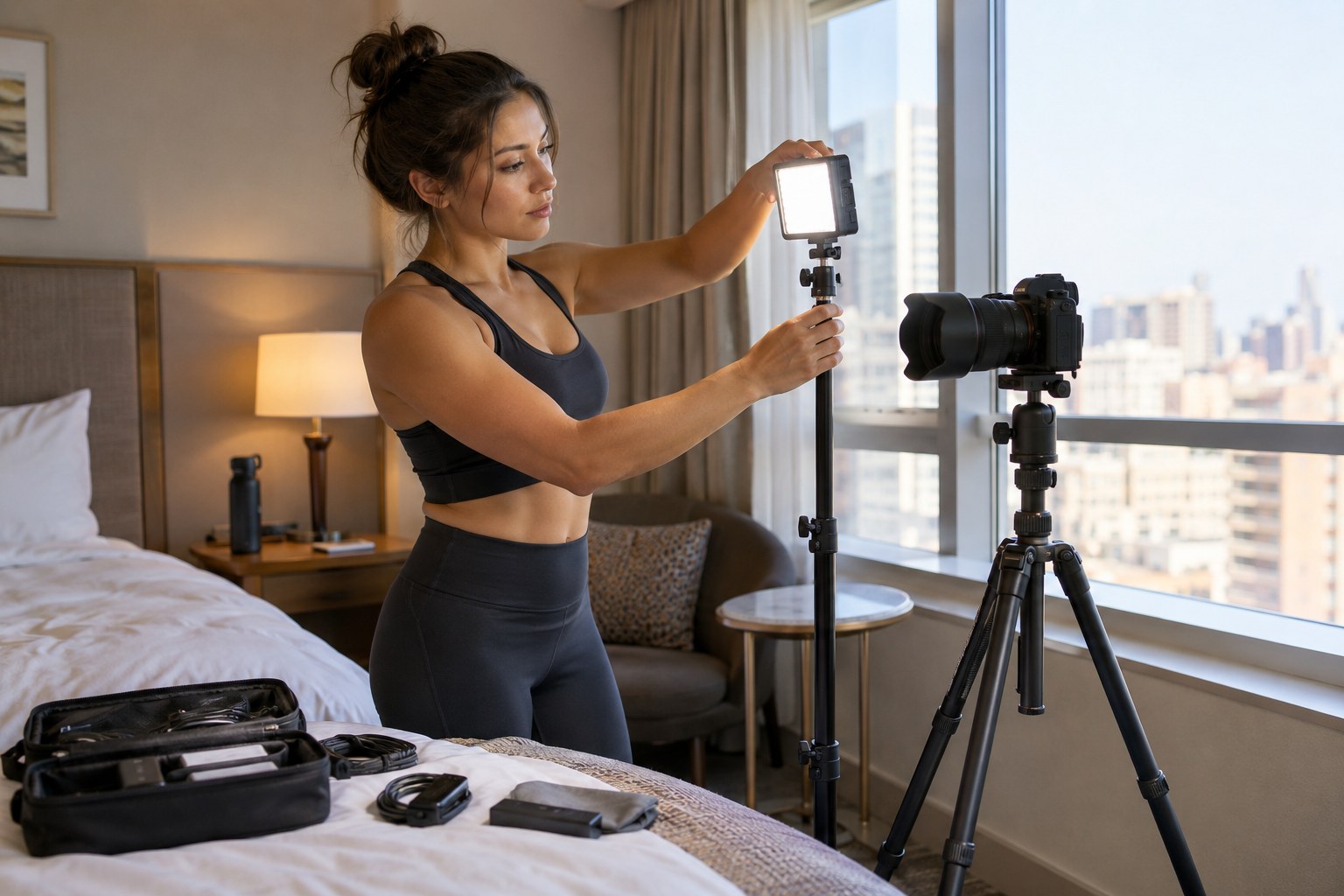
Assume a fitness-and-glamour creator publishes an original hotel-room lighting guide with discreet setup photographs. Three prospects appear: a travel photography resource page, a creator-business podcast interview, and an open submission directory. Using seven 1–5 ratings, the creator assigns the resource page 5, 5, 4, 4, 5, 3, 4 for 30/35; the podcast 4, 5, 5, 4, 5, 3, 4 for 30/35; and the directory 2, 2, 5, 1, 2, 5, 2 for 19/35. These are planning assumptions, not measured outcomes.
- Pitch the resource editor with one missing lighting detail and permission to use an original photograph.
- Pitch the podcast with a distinct angle about producing safely while travelling, not a generic request to appear.
- Defer the directory even though submission is easier; its weak context and low referral potential make volume a distraction.
- Create a separate tagged destination for each accepted placement so visits and later actions can be compared without guessing.
- Recheck the live page, anchor context, and destination after publication, then record whether suitable visitors arrived.
If traffic reaches the guide but nobody continues, the backlink may be fine while the page transition is weak. Clarify who the premium experience is for, what happens after the click, and what privacy boundaries apply. Review OnlyFans customer acquisition cost alongside referral quality before expanding the campaign; a free link still consumes production and relationship effort.
The tie between the resource page and podcast should not be broken by prestige. Choose the option you can support with the strongest contribution now. If the photograph and guide are ready, pitch the resource editor first; if you have a sharp firsthand story and can speak comfortably, prioritize the interview. After publication, compare qualified actions such as guide completion, offer-page visits, or email sign-ups—not only sessions. A high-scoring link can still underperform because the audience is curious rather than ready to buy. Keep the relationship; revise the transition before seeking clones of the placement.
How do you run backlink outreach without damaging your brand?
Run backlink outreach as a small publishing and relationship system. Protect consent, privacy, compliance, and reputation first; then verify placements and expand only from patterns that send suitable visitors or create credible editorial value.
Begin with a clean public site: an informative asset, an about page, clear navigation, contact details, and a relevant offer path. Keep explicit previews away from pages intended for broad editorial reference unless the audience and publisher clearly permit them. Before sharing images, confirm that you own the rights and that every identifiable participant consented to that use. Read each publisher’s rules rather than assuming a polite email overrides them.
- Week one: select one audience question and publish one genuinely useful, indexable asset on your domain.
- Build a ledger of relevant articles, podcasts, suppliers, collaborators, events, and community resources; reject obvious link sellers and automated schemes.
- Score every prospect, manually inspect the leaders, and prepare a specific contribution for each.
- Send a small outreach batch, record replies, and follow up once only when the contact has not prohibited it.
- Verify accepted links on the live page, test the destination on mobile, and monitor tagged visits and meaningful next actions.
- Review placements periodically for removal, changed context, broken destinations, or privacy issues; update or request correction when necessary.
This approach does not fit creators who lack a safe public destination, cannot maintain the resource, or need immediate traffic. In that case, improve the site and conversion path before outreach, while using faster channels carefully. If OnlyFans promotion not working is the broader problem, diagnose the offer, audience, trust, and page transition rather than asking backlinks to rescue all four.

Turn borrowed discovery into an owned creator business
Backlinks become more valuable when the destination is yours. Once useful resources, interviews, and partner references point to an owned domain, you can improve the offer without rebuilding every external relationship.
Scrile Connect is a white-label platform for launching a branded fan and subscription website with subscriptions, tips, pay-per-view content, paid messages, livestreams, video calls, flexible payment options, moderation support, and administrative tools. It suits creators and teams ready to connect discovery with a monetization experience they control.
Frequently asked questions
What is OnlyFans backlink building?
It is the process of earning links from relevant external websites to a public page in your creator funnel. The best placements provide useful editorial context and can support both qualified referral traffic and discovery.
Should backlinks point directly to my OnlyFans profile?
Usually, an owned website is the stronger primary destination because you can publish useful resources, measure visits, and change the paid path later. Direct profile links can still make sense when a publisher permits them and readers already understand the offer.
Do backlinks guarantee higher search rankings?
No. A backlink is one signal and one possible referral route, not a ranking guarantee. Site quality, search intent, content usefulness, technical accessibility, competition, and other factors also matter.
How many backlinks do I need?
There is no universal number. Prioritize relevant, legitimate, durable placements and evaluate whether they send suitable visitors. A numerical target without quality criteria encourages weak acquisitions.
Can I buy backlinks for an OnlyFans website?
Buying placements created mainly to influence rankings carries search, removal, and reputation risk. Sponsorships may be legitimate marketing, but they should be disclosed appropriately and evaluated for real audience value rather than disguised as editorial endorsements.
What content attracts backlinks for creators?
Useful public assets work best: original tutorials, safety resources, firsthand data, interviews, checklists, location guides, production workflows, and genuine partner pages. The asset should answer a question even for someone who never subscribes.
How should I track backlink performance?
Record the source page, destination, context, publication date, and verification date. Use distinct tagged destinations where appropriate, then examine qualified visits and next actions rather than treating every click as equal.
What backlink tactics should creators avoid?
Avoid automated submissions, unrelated directories, comment spam, forced keyword anchors, undisclosed paid links, fake partnerships, private material shared without consent, and any placement that violates the publisher’s rules.

Builds SaaS platforms for content creators, agencies, and entrepreneurs. Writes about the business mechanics behind creator-economy products and how custom software actually ships.