Quick answer
OnlyFans terms of service are not just “rules to read later.” For creators, they are the live filter that decides whether your uploads, payment flow, account setup, and identity trail stay safe. The fastest risks are usually not “bad intent” but weak consent records, unclear ownership, off-platform payment paths, or account behavior that looks manipulated. Use this page to check the highest-risk rules before posting, and to see what the platform usually looks at first when an account gets flagged.
For creators, the OnlyFans terms of service work less like a legal booklet and more like an operating system with red lines. A file can be clean on its own and still create trouble because the consent trail is weak, the ownership record is missing, or the payment route looks like a bypass. That is why this article focuses on account-risk decisions, not on a generic list of platform rules.
What the OnlyFans terms of service cover in practice
Most summaries reduce the platform to one sentence: do not upload illegal content. That is true, but it is too thin to help when you are deciding whether a collab, repost, AI edit, or message funnel is safe enough to go live. The real job of the TOS is broader: it sets the rules for identity, content rights, monetization, user conduct, and enforcement when the platform sees risk.
That matters because moderation rarely starts with the “worst” possible violation. Sometimes the account gets reviewed because the metadata is sloppy. Sometimes the payment path looks off. In other cases, the content itself is not the only problem; the platform cannot verify who owns it, who agreed to appear, or who is actually behind the account. If you want the big picture in plain language, think of the TOS as a checklist that protects the platform from fraud, abuse, and disputes — not just a ban list for explicit content.
To see how this rule system connects to other risk areas, it helps to keep the sister guides nearby: OnlyFans release form for consent evidence, OnlyFans copyright for ownership and reuse, and OnlyFans shared account for login and operator risk.
The rule set is layered, not flat
OnlyFans does not treat every issue the same way. Illegal material, non-consensual content, fraud, and identity manipulation sit at the top of the risk ladder. Lower on the ladder are things like weak descriptions, messy file attribution, or conduct that looks suspicious even if the content itself is not obviously unlawful. That difference matters because a creator can lose time and revenue over a process failure long before a “hard ban” issue appears.
In practice, this means you should stop asking only “is the clip sexual?” and start asking “what part of the workflow could make this look unsafe?” That one shift catches more problems than a long list of don’ts.
Why borderline cases cause the most damage
Creators usually know the obvious red lines: minors, coercion, stolen content, and overt fraud. The surprises show up in the gray zone. A collab may have verbal approval but no written proof. An AI edit may be creative but unclear in labeling. A repost may come from someone who “said it was fine” but never had the rights to give you. Those are the cases that often trigger review because the platform is not only judging the media, it is judging the trail behind it.
That is where the cost of guessing wrong becomes real. A review can freeze uploads, delay payouts, or force re-verification right when a launch or promo run is active. For a solo creator, that can mean losing a day of momentum. For a team, it can mean cleaning up a chain of files, permissions, and messages that should have been checked before the first post went live.
Warnings are not harmless notes
A warning usually means the platform already sees something it wants corrected. It is often the cheapest moment to fix the workflow. If you keep posting as if nothing happened, the same issue can turn into restriction or suspension. Creators who treat a warning as a documentation task, not a reputation task, usually recover faster because they move immediately to the evidence trail.
The highest-risk OnlyFans terms of service rules creators need first
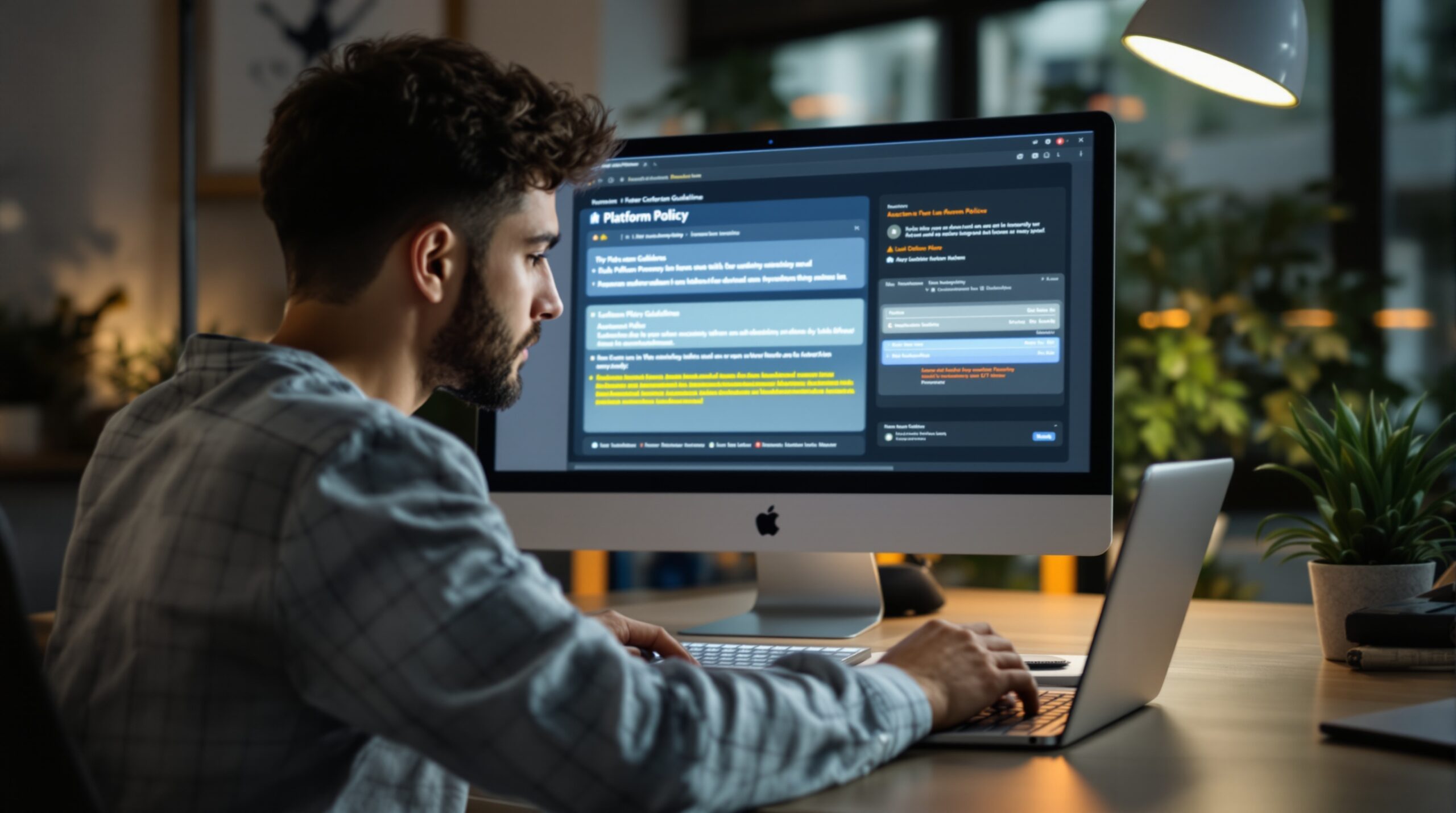
If you are short on time, start here. These are the categories that carry the fastest enforcement and the least room for confusion. They are also the easiest to misunderstand when a workflow is rushed. In plain terms: the biggest risks come from illegality, consent failures, ownership gaps, payment bypass, and account manipulation.
That hierarchy matters because many creators try to fix every rule at once. That is the wrong order. A profile with weak identity records and off-platform payment behavior is already exposed even if the content itself looks “allowed.” Focus first on the areas that create the fastest review or the hardest recovery.
Illegal content and exploitative conduct
Anything tied to illegal activity is the top-tier risk. So are coercion, abuse, harassment, exploitation, and any material involving minors. A platform does not need to prove bad motive before it acts on a clear breach. If a piece of content, message thread, or collaboration pattern looks exploitative, the account can be moved into review quickly.
Creators often make a smaller mistake here: they assume “this is edgy, not illegal.” That assumption is dangerous because platform rules and local law can overlap in ways that are easy to miss in a fast upload cycle. The safest test is simple: if any part of the workflow feels legally uncertain or coercive, do not post until you have checked it.
For the legal backdrop, the DMCA page is a useful companion when the issue is unauthorized reuse or takedown rather than conduct itself. A plain-language reference like The DMCA overview is enough to remind you that rights disputes are treated separately from consent disputes.
Non-consensual content, release forms, and featured people
Consent is where many collabs fail. If another person appears in the content, the platform expects a clear trail that says they agreed to be recorded and reused. A release form is not busywork. It is the proof that turns “we talked about it” into a record the account can survive later.
Ownership is a separate question. Someone can agree to appear and still not give you the right to repost, sell, crop, or repackage the material. That distinction matters more than most new creators expect. The relationship may be friendly; the rights still need to be explicit.
This is also why a collab can look fine on the shoot day and become a problem three days later when a partner changes their mind or support asks for the paper trail. If you need a more operational view of that process, use the sister guide on OnlyFans release form before you upload anything that includes another person.
Copyright, AI media, and impersonation risk
Copyright trouble is not limited to stealing another creator’s full clip. It can show up in thumbnails, captions, audio, artwork, and edited reposts that were borrowed too freely. AI-generated or deepfake-style media adds another layer of risk because the issue is not only authorship, it is also trust. If the account uses synthetic media without the right clarity or verification, the platform may treat it as a moderation issue even when the creative intent is obvious to you.
Impersonation is another high-friction category. If the profile makes the account look like someone else, or if the verification trail does not match who is actually posting, review becomes much more likely. On a platform that depends on identity trust, that is a serious break. Good creators often miss this because they think of branding as visual style; the platform sees it as identity consistency.
If you need the reuse and ownership side in a narrower format, the sister article on OnlyFans copyright is the better place to separate ownership, takedown risk, and reuse rights.
Money rules, off-platform payments, and fraud signals
Payment behavior is one of the most underestimated risk areas. Off-platform requests, hidden invoices, side deals, and payment routes that bypass the approved flow can all look like fraud. Even if the content is allowed, the account can still draw attention if the money path is unclear. That is why pricing is not just a business choice; on OnlyFans, it is also a compliance signal.
Creators sometimes treat monetization as if it lives in a separate lane from content rules. It does not. If the subscriber is pushed into a private payment route, or if the account promises one thing and delivers another, the platform may read it as deceptive behavior. That is especially risky when money is discussed in DMs, in external links, or in a way that looks like an attempt to avoid platform controls.
For operational planning, it helps to compare platform-controlled payment rules with what a branded stack can support. If you need to see the difference between policy-limited monetization and product-limited monetization, the sister page on OnlyFans features makes that boundary easier to see.
Account manipulation, bots, and fake activity
Buying fake followers, using bots, proxying the login, or running multiple accounts in a misleading way is a fast path to enforcement. These are not harmless growth tricks. They break the trust model behind the account and can make a creator look unreliable even if the content itself is clean.
One common pattern is a sudden jump in engagement that does not match the actual audience behavior. Another is shared logins that blur who posted what. Both can trigger review because the platform is looking for a clean audit trail. If the account cannot explain its own activity, the system assumes the safest thing: something is off.
If shared access is part of your workflow, do not treat it as a convenience issue. It is a compliance issue. The dedicated OnlyFans shared account guide is the right place to sort out operator access, posting authority, and the risk of proxying.
| Risk area | What it usually looks like | Why it gets flagged | First check |
|---|---|---|---|
| Illegal content | Material tied to crime, coercion, minors, or prohibited acts | Immediate policy breach with little room for recovery | Ask whether any step is unlawful in the relevant jurisdiction |
| Consent failure | Featured person did not clearly agree to be recorded or reused | Non-consensual or exploitative content risk | Confirm written permission before filming or posting |
| Ownership gap | You repost a clip, image, or audio file you do not control | Copyright and rights violation | Check who owns the file, not just who appears in it |
| Payment bypass | Subscriber is pushed to pay outside the approved flow | Fraud and monetization bypass signal | Keep every sale inside the approved payment path |
| Account manipulation | Bots, fake followers, proxy access, or misleading multi-account use | Trust and integrity problem | Review who logs in and how engagement is generated |
Who the OnlyFans terms of service apply to
The obvious answer is the creator. The practical answer is broader. Managers, agencies, editors, collaborators, and sometimes subscribers can all create risk when they touch the workflow in the wrong way. That is why account governance matters even when the profile looks like a one-person setup.
As the workflow grows, the number of people who can create a mistake grows with it. A manager uploads a file without the right notes. A partner appears in a shoot without a clean release trail. An editor borrows media from somewhere else. The account may still look normal from the outside, but the internal trail is already messy. That is often what turns a small policy issue into a moderation problem.
Creators carry the main responsibility
When content goes out under a creator account, the platform generally treats the account owner as responsible for it, even if someone else helped prepare the file. That is the operational truth many new creators miss. If something is posted under your profile, the platform will usually look to you first.
Collaborators and featured people create rights risk
Anyone shown in the content can create consent and release issues. If their role is not documented, the account is exposed. The platform does not care that the shoot felt casual if the record trail is too weak to prove what happened.
Managers, agencies, and operators increase the need for controls
Third-party operators can make compliance faster when they are disciplined, and much worse when they are sloppy. One bad upload process can contaminate several creator profiles at once. For agencies, the real risk is not only one suspension; it is losing momentum across multiple accounts in the same week.
Subscribers and buyers can still create account risk
Subscribers are not the main audience of this page, but their conduct still matters if they harass, scam, or pressure creators off-platform. Even if the creator did nothing wrong, the account may still feel the operational damage first. That is why moderation tools and messaging boundaries matter.
What happens after a policy violation
Most creators want a single answer here: “Will I be banned?” The honest answer is that enforcement usually moves in steps, and the speed depends on severity, history, and how clear the breach is. A missing document is not the same as a payment-bypass pattern. A weak release trail is not the same as exploitative content. The platform reacts differently depending on what it sees.
Understanding the sequence matters because the correct response changes at each stage. A warning needs a fix. A review needs evidence. A restriction needs a stop-and-audit response. A suspension means the business has to slow down and rebuild the trail before it tries to move again.
Warning
A warning is the first signal that the account needs correction. It usually means the platform has seen a real issue but has not yet moved to the harshest response. Creators who dismiss the warning usually make the next step harder because the same error stays visible.
Review
Review means the platform is checking context. That can slow uploads, payouts, or account actions. For a creator, review time is dead time unless the needed evidence is ready. If your files, permissions, and payment trail are not organized, the delay gets longer.
Restriction
Restrictions can limit posting, monetization, or feature use. The account may still exist, but the business is impaired. Even a short restriction can break a launch plan, stall conversion, or delay a promo window. In other words: a small moderation issue can turn into a concrete revenue loss very fast.
Suspension
Suspension usually means immediate operational pain. New content stops, cash flow gets uncertain, and support becomes part of the daily routine. If the account is the main sales channel, the creator loses not only access but also momentum.
Termination
Termination is the worst case. The account path is gone, and the audience tied to it may be hard to rebuild. When the business depends on a single profile, termination is not just a policy event; it is a business interruption.
If you already received a flag, the next move is not to keep posting normally. Audit the last uploads, the login trail, and the payment path before you do anything else. If the account is already under pressure, the sister guide on recovering an OnlyFans account is the follow-on step.
How to check borderline content before posting
A pre-post checklist is the cheapest form of account insurance. It is faster than a review call and far less painful than fixing a post after a partner spots a problem. Teams that use a short checklist before upload usually catch the mistakes that happen at the last mile: the file that was assumed to be cleared, the collaborator who never signed, the payment link that drifted outside the platform, or the profile detail that no longer matches the verification trail.
When creators are busy, this is where the account usually breaks. Not in the big policy debate. In the final handoff. One person assumes the release was collected. Another assumes the payment route is fine. Nobody checks the upload one last time. That is exactly how a preventable issue turns into a review.
Owner / permission check
Who owns the file? Who has the right to publish it? If you cannot answer both in one sentence, stop. Content ownership should be clear before upload, not argued after the fact.
Consent check
Did everyone in the content agree to appear, be recorded, and be reused in the way you plan? If the answer depends on memory instead of documentation, the answer is not strong enough. Missing consent is one of the fastest routes to a policy dispute.
Payment-path check
Is every payment moving through the approved flow? Hidden invoices, side deals, and direct messages that move money off-platform are the kinds of shortcuts that create trouble later. The simplest fix is also the one people skip first: keep the money path visible and documented.
Identity and profile check
Does the profile match the account owner and the verification trail? If you changed names, roles, or management setup, make sure the account data still makes sense. Inconsistency here can trigger review even when the content itself is not the problem.
On the identity side, platform trust is concrete. Systems that depend on account verification need consistent identity signals, and that is why standards around digital identity matter. A plain reference like NIST digital identity guidelines is a useful reminder that verification is a control, not a formality. If your profile, operator access, and posting rights do not line up, the account becomes harder to trust.
If you are still deciding how much of your workflow should sit inside a platform you do not fully control, the sister article on OnlyFans features helps separate policy limitations from product limitations.
How this page connects to release forms, DMCA, shared access, and recovery
Creators usually experience these topics as separate problems, but they are connected. A release form solves consent evidence. DMCA and copyright handle unauthorized copying. Shared access increases login and audit risk. Recovery is what you need when one of those controls fails. That is why this page sits at the center of the cluster instead of beside it.
Once the rule system is clear, the other guides become easier to use. They are not random explainers. They are the next layer of the same compliance model, and they help you answer the question that matters most: what do I need to prove before I post?
Release forms
If someone appears in your content, release forms are where permission becomes proof. That is the practical line between “we agreed” and “the platform can verify it.”
DMCA and copyright
When the problem is copying rather than consent, DMCA and copyright are the relevant tools. They deal with unauthorized reuse, takedowns, and file ownership disputes. The policy page gives the account-risk view; the copyright page gives the rights view.
Shared access
Shared access makes bad uploads, impersonation, and weak audit trails more likely. If more than one person can post, the account needs stricter rules than a solo creator profile. Otherwise, the moderation problem becomes an access problem.
Recovery after a warning or ban
If the account is already flagged, the next move is cleanup, not more posting. Audit the last uploads, confirm what broke, and document the fix before you appeal or resubmit. That is why the recovery guide belongs at the end of the cluster, not the beginning.
How creators should use the OnlyFans terms of service week to week
The best way to use the TOS is not as a text you read once. It is a short workflow you run before each important post, collab, or monetization change. That is what keeps the account safer than a generic “be careful” mindset. The healthy state is simple: the file owner is known, the featured person is documented, the payment path is clean, and the profile matches the verification trail.
A lot of creators only think about the rules after something goes wrong. By then the cost is already visible: delayed uploads, lost momentum, frozen revenue, and extra back-and-forth with support. If you use the TOS as a pre-publish check instead, the account stays in the safer state by default.
That same logic is why some teams eventually move to a branded platform they control. When content rules, payout logic, and identity controls live in one place, the operator is not constantly adapting the business to someone else’s moderation system. For creators who are already dealing with repeated flags, the path to Recover OnlyFans Account becomes a damage-control task instead of a strategy.
Why teams choose Scrile Connect when policy starts slowing the business
Once a creator has to think about consent records, ownership proof, payout paths, and login control on every upload, the platform itself becomes part of the workload. Scrile Connect fits teams that want their own branded site, their own domain, and control over subscriptions, tips, pay-per-view, private messages, live streams, video calls, and custom payment flows. In other words, the rule layer becomes something the operator can shape instead of something they have to work around.
The practical value is not just branding. It is operational ownership. Teams that need a single dashboard for users, payouts, analytics, and moderation usually care less about cosmetic polish and more about whether they can set the rules without waiting on someone else’s platform policy. Scrile Connect is built for that kind of setup, with direct payments to the operator’s account, flexible payment processing, moderation support, and the ability to define custom terms of service and content policies.
That makes it a fit for solo creators who have outgrown a single-account workflow, agencies managing several talent profiles, and founders building a subscription business that needs more control than a third-party platform can give. It also fits adult and SFW creator businesses that want to keep ownership of the brand and audience while reducing the number of policy surprises that can interrupt revenue.
Ready to build the setup behind this?
If this is the operating problem you need to solve, use the product page as the next step. It shows where build your setup fits and what the platform covers beyond a single payment widget.
Frequently asked questions
What if my content is legal where I live but still feels risky under OnlyFans terms of service?
Treat platform risk and local legality as separate checks. If either one is unclear, do not post yet. The platform can still review or restrict the account even when the content is not illegal in your jurisdiction.
What happens if a collaborator agreed verbally but never signed a release form?
That is a weak record trail. Verbal consent may help your memory, but it is poor evidence if the content is challenged. Collect the written record before publishing, not after a complaint.
How do I know whether a payment route is too close to off-platform payment bypass?
If the subscriber is being pushed to pay outside the approved flow, assume it is risky. Hidden invoices, side channels, and private checkout links are common trouble spots. Keep the money path visible and documented.
Can shared logins trigger a violation even if the content is clean?
Yes. Shared access can create impersonation risk, bad uploads, and weak audit trails. A clean piece of content does not fix an account integrity problem.
What if I already got a warning, should I keep posting normally?
No. Pause and audit the last uploads, payment path, and account records first. Posting through a warning often turns a fixable issue into a deeper restriction.
When does it make sense to move off OnlyFans-style platform risk entirely?
When policy friction starts shaping your business more than product choice does. If you need your own rules, custom payments, and tighter control over moderation, a branded platform becomes the more stable path.
Project lead at Scrile. Helps clients pick what actually moves growth and bridges them with the engineering team. Writes about the operational side of software delivery — scoping, requirement translation, and vendor-team alignment.